[Gap] Samsung TSMC’s revenue gap has widened, and the AI chip market has become the key; President Rapidus: the production speed of 2 nanometers will be three times that of TSMC; Several chip projects

1. Samsung TSMC’s revenue gap is the key to expand the AI chip market;

2. President 2.Rapidus: The production speed of 2 nanometers will be three times that of TSMC, and cooperation has been discussed with 40-50 enterprises;

3. India seeks to strengthen its chip manufacturing capabilities, but many projects have suffered major setbacks;

4. Morgan Stanley: In 2050, the global output value of humanoid robots will reach 5 trillion US dollars, and the cost reduction to 15,000 US dollars is a key turning point.

1. Samsung TSMC’s revenue gap is the key to expanding the AI chip market.

Samsung Electronics recently released a financial report showing that its semiconductor division’s revenue in the first quarter of this year was 25.1 trillion won (about 51.733 billion yuan), down 17% from the previous quarter. At the same time, TSMC’s revenue in the first quarter increased by 42% year-on-year to 839.35 billion Taiwan dollars (about 38.82 trillion won). As a result, the quarterly revenue gap between the two companies has exceeded 10 trillion won.

It is reported that the decline in revenue of Samsung Electronic Equipment Solutions (DS) department is mainly affected by factors such as semiconductor export control, resulting in a decline in sales of high-bandwidth memory (HBM) for AI chips. As a latecomer to the HBM market, Samsung has not yet entered the supply chain of NVIDIA, which makes its HBM business unable to effectively boost its overall performance.

In contrast, TSMC’s outstanding performance is mainly due to the strong demand for AI and the accumulation of chip inventory due to tariff considerations. Wen Junhao, a researcher at Samsung Securities, pointed out that although TSMC’s smartphone business entered the off-season, the growth of high-performance computing (HPC) business successfully made up for this impact.

According to historical data, Samsung surpassed Intel to become the world’s top semiconductor revenue in 2021, but with the memory market weakening since the third quarter of 2022, TSMC began to overtake Samsung. Although Samsung briefly regained its leading position in the second quarter of last year, with the rapid growth of the AI semiconductor market, TSMC has taken the lead again since the third quarter, and the gap has been widening-from about 3 trillion won in the third quarter of last year to 8 trillion won in the fourth quarter, and then to more than 10 trillion won in the first quarter of this year.

The securities industry predicts that the revenue of Samsung’s DS division is expected to rebound to 28-30 trillion won in the second quarter of this year, mainly due to the bottom of the first quarter performance and the recovery of traditional chip demand before the implementation of the US tariff policy. However, TSMC has announced that its revenue forecast for the second quarter is US$ 28.4 billion to US$ 29.2 billion (a contract of 39 to 40 trillion won), which is still about 10 trillion won higher than Samsung’s expectation. Wei Zhejia, chairman of TSMC, said that this year’s annual revenue is expected to increase by 20% in US dollars, and AI-related demand will continue to be strong.

It is worth noting that although Samsung is a comprehensive semiconductor enterprise covering both memory and non-memory, TSMC only focuses on wafer foundry business, and there are differences in their business structure, they have a high degree of influence in the global semiconductor market and compete directly in the foundry field, so the status of "revenue first" is of great symbolic significance. Judging from the current trend, it is difficult to narrow the revenue gap between the two companies in the short term.

In the increasingly fierce competition in the global semiconductor market, the demand change in the AI chip market has become a key factor affecting the company’s revenue. In the future, the layout and performance of Samsung and TSMC in the AI field will further determine their position in the global semiconductor market.

2. President 2.Rapidus: The production speed of 2 nm will be three times that of TSMC, and cooperation has been discussed with 40-50 enterprises.

In an interview with the media recently, President Koike Chunyi of Japan Rapidus said that Rapidus is negotiating with many companies including GAFAM (a giant technology company) and artificial intelligence chip design start-ups in the United States to expand the foundry business. However, obtaining orders from manufacturers in China still faces difficulties.

Rapidus’s trial production line in Chitose City, Hokkaido, has been partially put into operation on April 1st, and it is expected that all processes will be started within this month. At present, the company has signed a memorandum of cooperation with two start-ups such as US AI chip design company Tenstorrent.

In the field of advanced semiconductor production, Rapidus obtained the manufacturing technology of 2 nm products from IBM in the United States, and strived to achieve mass production in 2027. Although this time is two years later than TSMC’s planned 2025, Koike Chunyi emphasized that the speed from ordering to chip production and assembly can be increased to more than 2 to 3 times that of TSMC, forming a differentiated advantage.
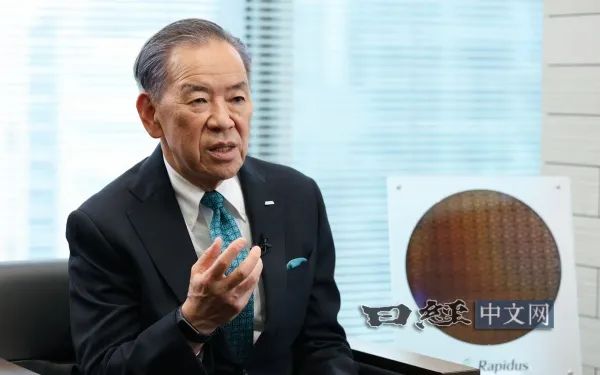
Koike Chunyi is full of confidence in the company’s technical prospects, saying that "technicians who know that Japan was the first in the world have mastered the 2-nanometer technology. This is a difficult challenge, but everything is going well at present. " He also pointed out that the improvement speed of the trial products is very fast, and the yield will gradually increase.

At present, TSMC occupies a leading position in the most advanced semiconductor production, and exclusively OEM AI chips and other products from NVIDIA, USA.
Koike Chunyi believes that with the tension between China and the United States, the demand of American customers for second suppliers is increasing, which provides market opportunities for Rapidus.

Looking forward to the future, Koike Chunyi said that Rapidus will also actively deploy 1.4 nm semiconductor technology after 2 nm. He stressed: "If you can’t devote yourself to the next generation of technology in about two and a half to three years, you can’t win in the world." Once the 2 nm OEM business is on the right track, Rapidus will continue to advance the preparation of the next generation of semiconductors.
At present, Japanese manufacturers can only produce 40 nm products at most, while 2 nm technology adopts a completely different semiconductor structure. As a latecomer, Rapidus hopes to return to the forefront of global semiconductor manufacturing by mastering this advanced technology.

3. India seeks to strengthen its chip manufacturing capability, but many projects have suffered major setbacks.

In order to promote the development of the industry from OSAT operation to mature manufacturing capacity, India is currently focusing on the independent manufacturing of intermediate products in the semiconductor value chain, especially chip manufacturing.
It is reported that in the past five years, the compound annual growth rate of investment in India’s semiconductor industry was 10.5%, and it will reach 37.1 million US dollars by 2024. It is expected that this upward trend will continue, and the investment will increase to 109.6 million dollars by 2030. The factors driving this growth include the domestic manufacturing growth of automotive electronics, telecommunications infrastructure, industrial automation and consumer electronics products, especially the expansion of 5G and artificial intelligence-based technologies.

The data shows that in 2024, driven by the electric vehicle revolution, India’s largest demand for semiconductors came from the automotive industry (33%). Driven by the deployment of 5G networks, India’s second largest demand for semiconductors comes from the telecommunications equipment industry (24%). Followed by data centers (14%) and industrial automation (14%), these areas have increased due to the continuous advancement of digital transformation of enterprise operations.

In addition, in 2024, India’s exports of semiconductor components reached US$ 4.21 billion, with a compound annual growth rate of 7.4% in the decade from 2015 to 2024. The main products include integrated circuit chips, capacitors, printed circuit boards and photovoltaic cells, and more than 200 countries/regions imported products from India. Among them, the rapid growth of photovoltaic panels and telecommunications equipment exports reflects India’s rising position in the global market.

In recent years, some initiatives/plans launched by the Indian government have prompted many terminal application fields to establish local OSAT facilities. The analysis points out that India has formulated relevant policy frameworks under the "Made in India" plan and the "Indian Semiconductor Mission" initiative to support its semiconductor ambitions. With the entry of global chip manufacturers, the expansion of domestic production capacity and the growth of R&D investment, India is on the verge of a semiconductor breakthrough.

However, India’s ambition in the global semiconductor manufacturing field has recently suffered a major setback, and two heavyweight companies have successively adjusted or abandoned their original semiconductor manufacturing plans.

In early May, Zoho, a software supplier, officially announced that it would abandon its semiconductor manufacturing plan. The company is famous for providing Zoho One, a business operating system with tools such as CRM, HR and marketing. Zoho announced in May last year that it planned to invest 700 million US dollars to set up a semiconductor wafer factory. Recently, Sridar Vembu, former CEO and current chief scientist of Zoho, said on social media X that the company’s board of directors thought it was not ready to invest in the field of chip manufacturing, so it decided to give up the plan.

At the same time, Adani, a large Indian industrial group, has also suspended discussions with Israeli chip maker Tower Semiconductor on the plan of a $10 billion wafer factory. The cooperation of this project was announced in September last year, and it is planned to build a wafer factory in Panvel, Maharashtra. It is expected to produce 80,000 wafers per month after full production, mainly focusing on the analog and hybrid chip markets. . According to reports, Adani decided that the project was not commercially feasible, so she chose to quit.

According to informed sources, Adani Group previously said that the project was still under evaluation, but after internal evaluation, it was found that there was uncertainty about how much demand the business could generate, especially in the Indian market, so the negotiations with Gaota Semiconductor have been put on hold. Another source said that Adani Group was dissatisfied with the financial resources that Gaota Semiconductor was willing to invest, but did not disclose specific details.

In addition, it is worth mentioning that the $19.5 billion joint venture between Vedanta, an Indian enterprise group, and Foxconn, Taiwan, China, broke down in July 2023, because New Delhi was worried about the project cost and the delay in the approval of incentives. At present, the projects being developed in India include a chip manufacturing plant and another chip testing plant invested by Tata Group with an investment of US$ 11 billion, and a chip packaging department invested by Micron with an investment of US$ 2.7 billion.

4. Morgan Stanley: In 2050, the global output value of humanoid robots will reach 5 trillion US dollars, and the cost reduction to 15,000 US dollars is a key turning point.

Recently, Morgan Stanley (referred to as "Morgan Stanley") released the latest research report, saying that it is estimated that the global output value of humanoid robots will exceed 5 trillion US dollars in 2050, and the deployment scale will be 1 billion units.

According to this report, the humanoid robot market will grow in a step-by-step way, starting from 2036 and entering the commercialization stage, breaking through 127 million units in 2040 and reaching the deployment scale of 935 million units in 2050. Morgan Stanley pointed out that the cost reduction to $15,000 is a key turning point, and it will be first applied to standardized fields such as industry and logistics, while home applications are limited by security and AI technology bottlenecks, and the penetration rate is below 8% for a long time.

In addition, the report also said that China has advantages in the field of humanoid robot hardware, while the United States occupies a high position in software, ecology and algorithms. The dispute between geopolitical risks and technical standards will probably lead to industrial division, and China and the United States will each become a camp.

However, Morgan Stanley also admitted that most of the current industries are in the "proof-of-concept stage", and only 4% of enterprises have real soft and hard integration capabilities, and even warned that the industry is suspected of "pulling out the seedlings to encourage".
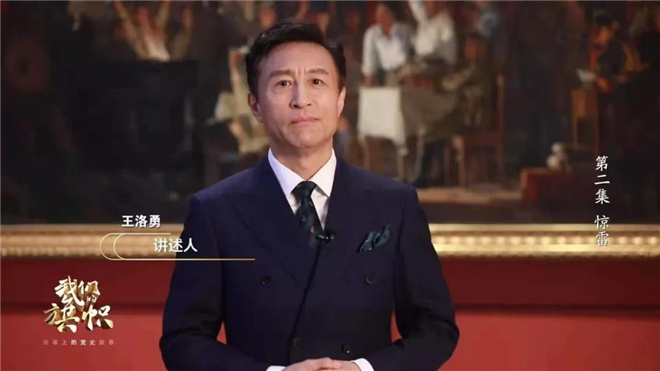
The film feature film "Our Flag" Episode 3: Lighting Spark


Special feature of 1905 film network Centennial magnificent picture scroll, light and shadow carving monument. The first two programs of the film channel’s large-scale film epic feature film "Dawn" and "Thunder" were successfully premiered on CCTV6 film channel, 1905 film network and the main platforms of the whole network, and the experts and filmmakers collectively recommended them, and the media of the whole network jointly reported and supported them, and the national audience praised them.


"Dawn" takes the audience back to China a hundred years ago. Filmmakers, artists, artists and so on will lead the audience through the time corridor woven by movies, from the Opium War in the late Qing Dynasty to the Revolution of 1911, to the May 4th Movement, until the crucial year of 1921, to retrace the path of early the Communist Party of China (CPC) people’s exploration and answer why the Communist Party of China (CPC) was born and why it became the choice of history and people. "Thunder" looks back on the Nanchang Uprising 94 years ago in the filmmaker’s narration, leading the audience to travel through time and space, and witnessing the gunfire that pierced the darkness before dawn in Chengtou, Nanchang on August 1, 1927, which was the first shot of "Thunder" that started the Communist Party of China (CPC)’s armed resistance against the Kuomintang reactionaries.


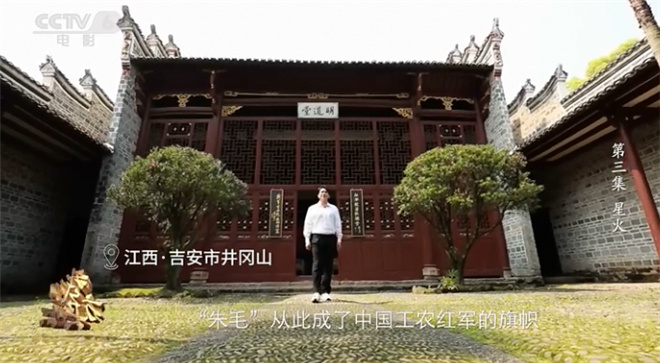
At 21:50 on July 13th, the third episode of Our Flag, Spark, arrived as scheduled. The narrator returned to single spark can start a prairie fire to pay tribute to the spirit of Jinggangshan, and told us about the autumn harvest uprising, the adaptation of the Three Bays, the March into Jinggangshan and the Gutian Conference. communist party people headed by Mao Zedong finally found a correct road that was in line with China’s reality, and also created a characteristic of "Marxism-Leninism in ravines" for the world revolution.


Mao Zedong said: "The red flag on the border has never fallen, which not only shows the strength of communist party, but also shows the bankruptcy of the ruling class, which is of great significance in national politics." Great flag consciousness determines great innovative practice. The bright red flag of the Communist Party of China (CPC) and the People’s Army was erected, which made the fire sown on Jinggangshan in 1927 finally become a prairie fire in the whole country!


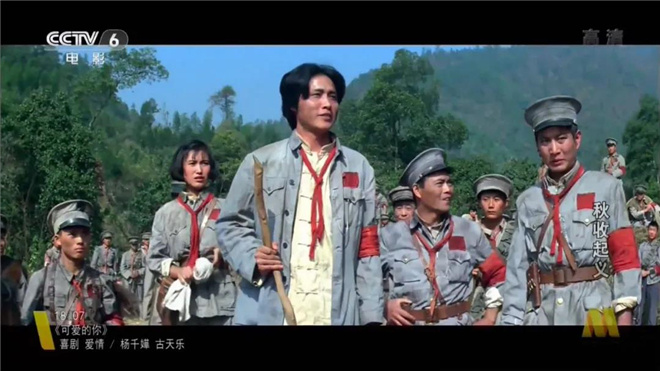
Today’s keynote speaker, Wang Renjun, was 36 when he played Mao Zedong in the 2019 film, just the same age as Mao Zedong in 1929. In this year, 36-year-old Mao Zedong, together with Zhu De and Chen Yi, led the main force of Gongsijun to leave Jinggangshan to develop in southern Jiangxi and western Fujian, but suffered successive blows and exclusion. There were more and more arguments with Zhu De, and even put forward that "it is difficult to continue working and prepare to study in Russia", and finally left the leadership position of Gongsijun, which he personally founded. All this is less than two years since Mao Zedong first boarded Jinggangshan and created the first rural revolutionary base in the Communist Party of China (CPC) … …


In his early years, Mao Zedong was famous for his pen. When he presided over Xiangjiang Review, he was so energetic that he reprimanded Fang Qiu. Young, he even opposed the violent revolution. But in 1927, Chiang Kai-shek launched the April 12th counter-revolutionary coup, the breakdown of the cooperation between the Kuomintang and the Communist Party and the failure of the Great Revolution, which made Mao Zedong realize the importance of the gun, and the so-called "political power comes out of the gun". From the barrel of a gun, Mao Zedong saw the way out for the Communist Party of China (CPC), which was facing life and death. He had to use his own armed banner to call on the people.


Xu Yan, an expert in military history and a professor at the National Defense University, told us why the autumn harvest uprising was launched that year: the autumn harvest was the season when China’s specific contradictions intensified — — China was a country with a rural population of 90%. Most of the rural areas are poor farmers, and they have to pay rent when the autumn harvest is over. After a year of hard work, when the autumn harvest arrives, we have to hand over the grain we have harvested to the landlord, and there is not enough food at home. Therefore, the contradiction is particularly easy to intensify at this time, and it is easy for farmers to respond when communist party people raise their arms.


According to Wang Luo, the actor of Mao Zedong in the film, Mao Zedong will go to Jinggangshan because the revolution will continue and communist party will lead the people to turn over and become masters of their own affairs. Although Mao Zedong has rich revolutionary experience, he has never fought and will not fight. It was the massacre of Kuomintang reactionaries that forced him to devote himself to the torrent of armed struggle without hesitation, serving as the secretary of the former enemy Committee of the autumn harvest uprising of Hunan Provincial Committee of the Communist Party of China and leading the uprising in a unified way. In October, 1927, marching into Jinggangshan was the result of Mao Zedong’s repeated thinking in the face of white terror in the dark, and it was also a choice based on the revolutionary reality of China.


After the adaptation of Sanwan, Mao Zedong creatively put forward the principle that the branch was built on the company, and established the party’s leadership system over the army from the organization, so that this revolutionary team fought hard and did not break up; The establishment of the Soldiers’ Committee has fundamentally changed the relationship between officers and soldiers into a brotherly and equal relationship, which is the first time in the history of China. Equality between officers and men enables the troops to maintain a vigorous spirit of revolutionary optimism under arduous circumstances. This has become a great beginning for building a new type of people’s army led by the proletariat.


According to Xu Yan, an expert in military history and a professor at the National Defense University, there were only 700 troops left when Sanwan was reorganized, and these 700 people were organized into a regiment. The regiment has a party committee, a party branch, a party group and a class with party member. From now on, the action of the army will be decided by the party Committee and the party branch. This laid the foundation for the people’s army to be led by the party.


In 1931, Mao Zedong changed the "three major disciplines and six attentions" set by the troops when they went to Jinggangshan into "three major disciplines and eight attentions". With iron discipline and the firm support of the masses, communist party’s army was invincible from then on. According to screenwriter Liu Rende, "the masses can carry boats and overturn them. You see, at that time, in order to do a good job in mass relations, a bowl of water could not be moved casually, and water should be picked by the stream, and it was not allowed to use the water from the fellow villagers’ tanks. "


Shi Zhongquan, an expert on the history of the Communist Party of China and former deputy director of the Party History Research Office of the Central Committee, believes that by restraining his own army, communist party let the people know that the army led by communist party is different from that of the Kuomintang. This has won the support and trust of the people.


Jinggangshan, the first rural revolutionary base, was the cradle of China revolution. On May 25, 1928, the Central Committee of the Communist Party of China promulgated the Military Work Outline, which instructed that "the army established in the separatist region can be officially named the Red Army, and the name of the former revolutionary army of workers and peasants can be abolished. The Fourth Army of the Workers and Peasants Revolutionary Army was renamed the Fourth Army of the Red Army in early June. Jinggangshan revolutionary base has grown rapidly. In just over four months, the troops developed from less than one regiment when they went up the mountain to two regiments. People’s governments have been established in Chaling, Suichuan and Ninggang counties.


According to Liu Rende, the screenwriter of Jinggangshan, Mao Zedong knows China’s national conditions very well. Therefore, he knew that China’s road should never copy Russian experience, Marxism-Leninism should also be combined with China’s reality, and his own road should proceed from the national conditions and people’s feelings, so he finally insisted on establishing rural revolutionary base areas and encircling cities from the countryside.


In January, 1928, Zhu De and Chen Yi led the rest of Nanchang Uprising Army into Yizhang and launched a vigorous uprising in southern Hunan. He Changgong, who designed the first flag of the Chinese Revolutionary Army of Workers and Peasants, risked being caught and killed three times and finally got in touch with this team. Zhu Mao finally came together. The historic handshake between the two great men opened a new chapter for the China Revolution and truly established the Jinggangshan revolutionary base.

Zhu Mao stationed and held high the bright and dazzling banner of persisting in struggle and dominating Jinggang, and a revolutionary road of "encircling cities from rural areas and seizing political power by armed forces" in China has begun to take shape. The great friendship between Zhu De and Mao Zedong was thus established, and the Fourth Army of the Workers and Peasants Revolutionary Army, later the Fourth Army of the Red Army, was jointly established. "Zhu Mao" has since become the flag of the Chinese Red Army of Workers and Peasants.


But unexpectedly, less than a year later, when Mao Zedong and Zhu De led GongSiJun to leave Jinggangshan and develop in southern Jiangxi and western Fujian, fierce conflicts and arguments broke out between them. According to the director of Gutian bugle, the dispute between Zhu and Mao is a battle of brothers, because they share the same belief. But everyone comes from different backgrounds, so they will have some differences in methods, and they will be fine in a moment. This is the truth gained in the struggle. After such a tempering, the purpose is to let the people live a happy life. So on such a basis, all contradictions between two people are not contradictions.


Liu Angong, who had just returned from studying in the Soviet Union, was sent by the Central Committee to work in Gongsijun. The "Letter from the Central Committee in February" he brought made a pessimistic assessment of the whole revolutionary situation, demanding that the Red Army of Zhu and Mao be dispersed into small groups to fight in the countryside, and that Zhu and Mao leave the army. In June, 1929, at the Seventh Party Congress of Gongsi Army, Mao Zedong was defeated as the secretary of the former committee, and the central punishment of "expelling alternate members of the Provisional Political Bureau" was also misrepresented as "expelling from the Party".

He can’t take part in organizing activities. The Kuomintang publicly fabricated the news of Mao Zedong’s death in the newspaper, which convinced the Comintern to believe it, and specially published more than 1,000 words of obituary to commemorate it. After the Party Congress, Mao Zedong left the main leadership position of Gongsijun and went to western Fujian to guide local work, but his heart was always worried about this team.


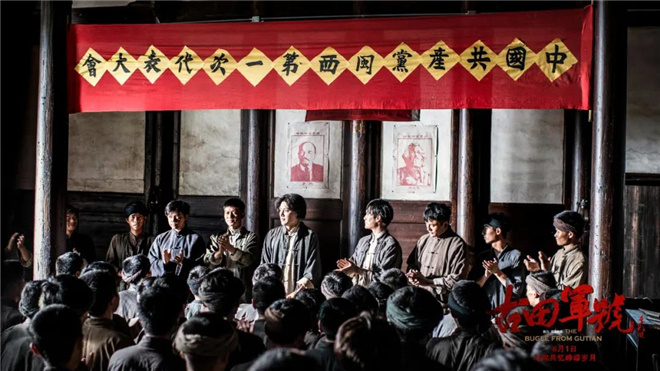
On December 28th, 1929, the famous Gutian Conference was held, and Mao Zedong was elected as the secretary of the front committee. He wrote eight resolutions of more than 30,000 words on behalf of the front committee. In his speech celebrating the 90th anniversary of the founding of the People’s Liberation Army in China, General Secretary of the Supreme Leader emphasized that "the fundamental principle and system of the Party’s absolute leadership over the army originated from the Nanchang Uprising, was based on the adaptation of Sanwan, and was finalized at Gutian Conference, which is the political characteristic and fundamental advantage of the people’s army completely different from all the old armies. "With this fundamental principle and system, the people’s army can continue to advance under the banner of the party and become an invincible revolutionary team.


According to Xu Yan, an expert in military history and a professor at the National Defense University, on January 5, 1930, a week after the Gutian meeting, Mao Zedong wrote back to Lin Biao, commander of the first column, answering his question about "how long can the red flag last?" It was printed and distributed to army cadres in the form of intra-party communication to educate the commanders and soldiers on the situation and tasks.

This letter was compiled into Selected Works of Mao Zedong, entitled "A single spark can start a prairie fire", which became a famous article for a while and played a great role in the Red Army. This article analyzes the revolutionary situation in China: Although the strength of the Red Army was still very weak at that time, it was equivalent to a single spark, but there was dry wood everywhere, and it was bound to start a prairie fire in the future.


A single spark can start a prairie fire, where there is a flag, there is direction, and where there is a flag, there is hope.During the great century-long history of the Communist Party of China (CPC), China films have never been absent, and have always been the witnesses, participants, recorders, promoters and disseminators of China’s revolution and construction. With the unremitting efforts of China filmmakers from generation to generation, a batch of classics of the times are constantly emerging, carving one classic moment after another in the long river of history.


Nowadays, China movies have become one of the most vivid, vivid and touching audio-visual teaching materials for studying the history of the Party. In order to celebrate the 100th anniversary of the founding of the Communist Party of China (CPC), tell the story of the Party history from the perspective and technique of movies, and inherit the great spirit of the Communist Party of China (CPC), a large-scale film epic feature film "Our Banner" came into being.


"Our Flag" is produced by the movie channel, and it is broadcast on CCTV6 movie channel, 1905 movie network and the main platforms of the whole network at 22 o’clock every Wednesday night. Tencent music platform TME_official, QQ music, cool dog music and cool music are broadcast exclusively.