[Our China Story] A time craftsman who made China’s ancient paintings "live"
A picture of women’s history, half of Chinese history. Gu Kaizhi, an outstanding painter in the Eastern Jin Dynasty, copied the Tang Dynasty’s "Illustration of Women’s History", which is the earliest existing silk painting of China in the world, and is known as the "open picture" of China’s art history. It is Qiu Jinxian, a senior restorer of the British Museum, who has made this treasure of the town hall "see the light of day". She is regarded as the first person in the industry to bring the restoration technology of China ancient paintings into Europe.
Since 1980s, she has come to the British Museum to engage in the restoration and protection of China’s ancient paintings. In 1994, the hirayama ikuo Oriental Painting and Calligraphy Restoration Room of the Cultural Protection Department of the British Museum was officially opened. Qiu Jinxian worked with her students and colleagues here to save more China ancient paintings and prolong the life of cultural relics by using exquisite China traditional skills. Up to now, 300 or 400 pieces of China ancient paintings have been restored to their former glory, and people who walk into the museum feel the Chinese culture hidden in the works of art..
Over the past 30 years, Qiu Jinxian has taught four overseas students. Among them, Ms. valentina Marabini and Ms. Carole Weiss have been following her for the longest time. They have been learning and feeling the charm of "grinding a sword for ten years" behind the restoration of ancient paintings in China, and they are engaged in this profession that requires time precipitation, experience accumulation and patience. Valentina loved Far East art since he was a child. He was trained in the protection and restoration of cultural relics in the Louvre Museum. Carol was influenced by her grandfather, who was a bookbinder, and began to pursue her interest in the protection of paper cultural relics when she was in college. In this interview with People’s Daily Online, Ms. valentina and Ms. Carol discussed with us their exploration of ancient art in China, shared their mental journey of deeply understanding China culture and their daily work in dealing with cultural relics, and showed everyone the awe of cultural relics restorers.
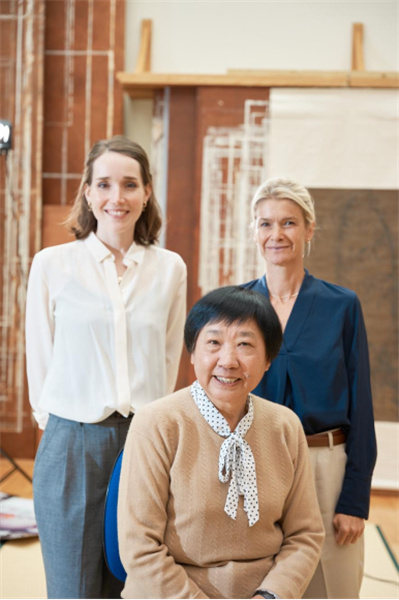
Valentina Marabini, Carole Weiss and Teacher Qiu Jinxian. Photo courtesy of respondents
Devote oneself to study art and specialize in the restoration of China ancient paintings
For valentina and Carol, who grew up in the west, the oriental culture is mysterious and far away, so it is very challenging to choose to engage in the restoration and protection of cultural relics in China. In the interview, valentina showed her dream of getting close to China’s scroll painting. She said that before entering the British Museum, she had no chance to get in touch with China’s works of art, and even if she studied cultural relics protection in Italy, she rarely had access to knowledge related to Asian painting. The appearance of teacher Qiu Jinxian really started her study on the protection technology of ancient paintings in China. Learning the restoration techniques of China’s ancient paintings is by no means an overnight achievement. Due to the huge cultural differences between the East and the West, at first, valentina didn’t understand the restoration methods of China’s ancient paintings. After the example of Qiu Jinxian and the daily training of basic skills, the daily work began to be smoother.
It often takes a long time to restore a work, and this kind of striving for perfection and serious work attitude is extremely precious. Apart from exercising basic skills, Qiu Jinxian particularly emphasized the importance of western cultural relics restorers understanding the history of China and the language of China. Valentina mentioned in sharing her working life in hirayama ikuo Oriental Painting and Calligraphy Restoration Room that all the materials used in the restoration of Gu Shuhua in China need to inherit the traditional restoration skills handed down from generation to generation by teachers. Therefore, it is very important to deeply understand the culture and history of China’s cultural relics and highly respect the traditions and protection methods of China. Through years of study, valentina is not only very familiar with China’s art and cultural traditions, but also can clearly make simple expressions in Chinese. She said, "When repairing these ancient China paintings, we must maintain all their features and craftsmanship. This is why as a new generation of cultural relics restoration workers, we have the responsibility to continue this tradition. "
When talking about the mounting and restoration of China’s scroll paintings, Carol also talked about the great differences between the restoration methods of the East and the West. In the west, the restoration of Gu Shuhua needs to minimize the interference with goods, mainly in maintaining. However, in the restoration of China scroll, intervention is needed. This requires intensive training and rich experience of prosthodontists to ensure the safety of this intervention method.
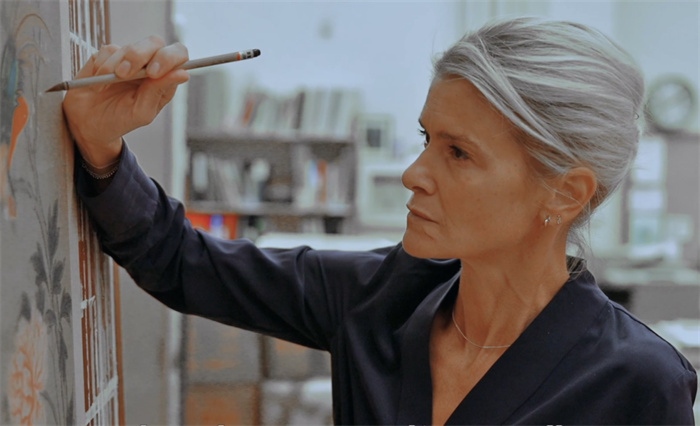
Valentina Marabini. Pan Geng photo
Further study in Shanghai promotes cross-cultural understanding.
Overseas people studying the restoration of cultural relics in China can greatly promote the understanding and appreciation across eastern and western cultures. In 2014, under the leadership of teacher Qiu Jinxian, and with the cooperation of valentina and Carol, the Picture of Women’s History was restored and re-presented to the audience. This is an influential large-scale secondary restoration project, which has witnessed the strength of international cooperation. Before re-displaying this masterpiece, the studio held a symposium, which brought together experts and reel restorers from China and other parts of the world to discuss various restoration possibilities and schemes, and listened to different opinions on how to deal with these paintings.
Carol believes that through such open communication activities, different dialogues are held and different restoration methods are discussed, so that she can understand the oriental culture as a whole, see the value of each method, and judge the best restoration method for each painting, so that each ancient painting can have the best presentation. Valentina also said that it is very necessary to keep close relations with many Asian institutions and other foreign museums of Asian art countries, learn from each other’s strong points through cooperation, brainstorming, meetings and talent exchange, and find a solution to how to protect ancient paintings in the future, which is also a very effective way to strengthen the protection of cultural relics in China.
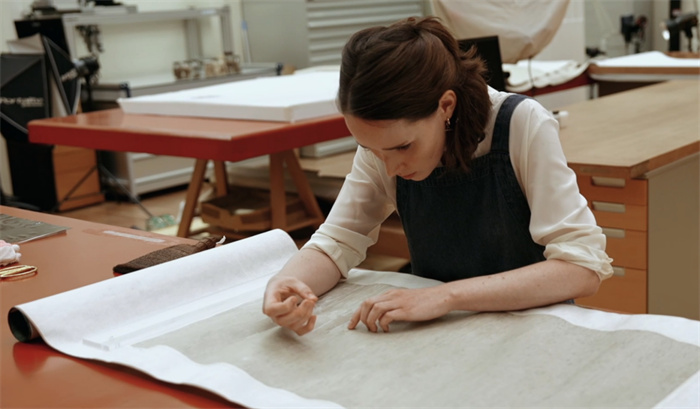
Carole Weiss. Pan Geng photo
Based on the cooperation between the British Museum and the Shanghai Museum, valentina and Carol also got the opportunity to work in China. During this period, they not only experienced the culture and life of China personally, but also improved their Chinese language level and understanding. They also received more professional guidance from China restorers, and further improved their restoration skills of China ancient paintings. They also fully understood the importance of maintaining the authenticity and principles of China’s paintings, and felt the importance of understanding the philosophy behind them.
They all hope that in the future, China ancient painting restorers at home and abroad can continue the authenticity of the restoration methods, adhere to the principles behind them and maintain the highest preservation standards, so as to further promote the protection and restoration of cultural heritage.