The State Financial Supervision and Administration Bureau answered a reporter’s question on "Notice on Strengthening the Management of Municipal Branches of China Export Credit Insurance Corporation"

  Cctv newsAccording to the website of the State Financial Supervision and Administration, the State Financial Supervision and Administration recently issued the Notice on Strengthening the Management of Municipal Branches of China Export Credit Insurance Corporation (hereinafter referred to as the Notice), and the heads of relevant departments answered questions from reporters.

  1. What is the background of the formulation of the Notice?

  A:In the early stage, the General Administration of Financial Supervision cleaned up and standardized the establishment of branches of China Export Credit Insurance Corporation (hereinafter referred to as Export Credit Insurance Corporation), and promoted the optimization of the branch layout of the company. In order to consolidate the results of clearing up the norms, make up for the shortcomings of the supervision system, and further strengthen the supervision and management of the municipal branches of export credit insurance companies, the General Administration of Financial Supervision drafted the Notice on the basis of extensively soliciting opinions from all parties.

  Second, please introduce the main contents of the Notice?

  A:One isComprehensively strengthen internal management. The Notice systematically standardizes the management requirements for municipal branches in terms of personnel management, post checks and balances, business scope, risk compliance, internal control and internal supervision.

  twobeStandardize system construction and data management. The Circular requires municipal branches to realize independent statistics of business data and independent accounting of financial data, and report regulatory information to local regulatory agencies on time and accurately.

  threebeClarify the regulatory requirements and responsibilities. The "Notice" clarifies that the municipal branches shall implement supervision and management according to the relevant requirements of the central branch of the insurance company, and the supervision responsibilities shall be divided according to the principle of territoriality.

  3. What other work arrangements will be made after the issuance of the Notice?

  A:In the next step, the General Administration of Financial Supervision will do a good job in the implementation of the Notice, guide the supervision bureaus to effectively strengthen the supervision and management of the municipal branches of export credit insurance companies, comprehensively improve the standardization and refinement of their internal management, give full play to the role of export credit insurance policy tools, and solidly and effectively serve the stable scale and excellent structure of foreign trade.

In 2020, the list of national model workers in Guangdong Province was publicized! Is there anyone you know?

According to the notice requirements of the General Office of the Provincial Party Committee and the General Office of the Provincial Government on doing a good job in the recommendation and selection of national and provincial model workers in Guangdong Province in 2020, in order to embody the principles of openness, fairness and justice, fully carry forward democracy and accept social supervision, the recommended list of national model workers, advanced workers and provincial model workers, advanced workers and advanced collectives in Guangdong Province in 2020 is now publicized.
During the publicity period, any individual or unit can reflect the relevant situation and problems of the publicity object through letters, visits, telephone calls, emails and other forms. Advocating signing or reporting one’s real name in one’s own name; Reflected in the name of the unit should be stamped with the seal of the unit.
To reflect the situation and problems of the publicity object, we must adhere to the principle of objectivity, fairness and seeking truth from facts, and we must not take the opportunity to slander and falsely accuse.
Publicity time:May 25th-May 29th, 2020, 8: 30-12: 00, 14:00-17:30.
Accepting unit:The office of Guangdong Provincial Model Workers, Advanced Workers and Advanced Collective Awards and Commendations Committee in 2020 is located in 1412, Guangdong Provincial Federation of Trade Unions.
Contact telephone number:020-83871419
Chuanzhen:020-83847170
E-mail:szjjgzb@126.com
Address:No.5, Nandongyuan Road, Yuexiu, Guangzhou
Post:510110
Office of Guangdong Provincial Model Workers, Advanced Workers and Advanced Collections Selection and Commendation Committee in 2020
May 25, 2020
National Model Workers (80)
Swipe up to read
Minister of Process Engineering Department, Technical Center, Chen Jianguo Guangzhou Automobile Parts Co., Ltd.
Zhang Huiyuan Taxi Driver of Guangzhou Baiyun Taxi Group Co., Ltd.
Zhou Zhen General Manager and Chief Scientist of Guangzhou Hexin Instrument Co., Ltd.
Zeng Qiaoling (female) Secretary of the General Party Branch and Director of the Neighborhood Committee of Donghui Community, Tianyuan Street, Tianhe District, Guangzhou
Deng Yanmei (female) Director of Network Operation and Maintenance Center of Guangzhou Branch of China Telecom Co., Ltd.
Zhang Chongyang Chief Technician of Maintenance Center of Operation Headquarters Base of Guangzhou Metro Group Co., Ltd.
Zhang Chunbo Chairman of Guangzhou Baiyunshan Zhongyi Pharmaceutical Co., Ltd.
Cai Mude, Deputy Manager of Shipping Department of Tugboat Branch of Guangzhou Port Co., Ltd.
Zeng Junqin Guangqi Honda Automobile Co., Ltd. produces CB2 class workers in the body welding department of the headquarters.
Chen Meixiang (female) Deputy General Manager, Assistant to the Chairman and Chairman of the Trade Union of Guangzhou Jianling Electric Appliance Co., Ltd.
Wang Xiutian (female), manager of Zhixiu (Cow Queen) dessert shop in Shawan, Panyu District, Guangzhou
Technical Team Leader of Li Mingquan United Dazhi (Shenzhen) Automobile Service Investment Co., Ltd.
Li Shuangshuang (female) System Research Technology Manager of Shenzhen Mindray Biomedical Electronics Co., Ltd.
Zhou Chuangbin, Deputy Chief Engineer of Commissioning Center of China Guangdong Nuclear Power Engineering Co., Ltd.
Zhang Yun (female) Manager, Internet of Things Room, Information Solution Center, Shenzhen Branch of China Telecom Co., Ltd.
Chen Peng (female) Chairman of the Federation of Trade Unions of Foxconn Technology Group
Zhang Haiwei, First Secretary of the Party Committee of Keyuan Community, Buji Street, Longgang District, Shenzhen, Stationmaster and Director of Neighborhood Committee.
Xu Zaisheng, squad leader of tower crane dismantling in engineering equipment company of China Huaxi Enterprise Co., Ltd.
Li Minghua, Director of Trial-production Workshop, Production Department, Shenzhen Heisby Ocean Technology Co., Ltd.
Chenchun SF Express Co., Ltd. Receiving and Dispatching Personnel
Engineer TE100, Technical Operation Department, Motianyu Aeroengine Maintenance Co., Ltd., Wanghai Zhuhai Free Trade Zone
Liang Beauty (female) Head of Zhuhai Jincai Aquaculture Professional Cooperative
Chen Jinxi, Deputy Director of Manufacturing Center of Guangdong Bangbao Educational Toys Co., Ltd.
Wang Jiaqing, Project Commander of South China Branch of the Third Construction Engineering Co., Ltd., China Construction Second Bureau.
Ma Xuejie Head of Shunjie Agricultural Machinery Breeding Professional Cooperative, Chaoyang District, Shantou City
Liu Yijun, vice president of production technology and director of provincial engineering center of Mona Lisa Group Co., Ltd.
Li Jinbo, Director of Innovation Center of Guangdong Midea Refrigeration Equipment Co., Ltd.
Song Keming, Vice President and Chief Engineer of Guangdong Liansu Technology Industry Co., Ltd.
R&D Director of Tangqi Guangdong Tedi Ceramics Co., Ltd.
Su Ronghuan, Assistant General Manager and Environmental Protection Engineer of Foshan Kewei Optoelectronics Co., Ltd.
Peng Fangzhao CNC engineer of Foshan Anchi Biotechnology Co., Ltd.
Monitor of debugging class in maintenance work area of energy environment department of Guangdong Shaoguan Iron and Steel Co., Ltd. of Zhongshao Baowu Group
Fu Jiewei, Chief Mineral Processing Technician of Flotation Workshop of Mineral Processing Department of Guangdong Dabaoshan Mining Co., Ltd.
Deputy Chief Engineer of Limin Pharmaceutical Factory of Liu Xuehua Livzon Group
Secretary and Chairman of the Party Branch of Lufeng Fruit and Vegetable Professional Cooperative in Jiu Feng Town, Lechang City, Pan Guoping
Manager of R&D Department of Wang Yanqing Jingdian (Heyuan) Display Technology Co., Ltd.
Luo Su ‘e (female) is a villager in Changzhou Village, Huangshi, Longchuan County.
Huang Guoyu, technician of Guangdong Kelun Pharmaceutical Co., Ltd.
Li Bin, Party Secretary, Deputy General Manager and Trade Union Chairman of Guangdong Tapai Group Co., Ltd.
Luo Xinhui, head of xingning city Runfeng Agricultural Professional Cooperative
Gao Dongbin Production Supervision of No.7 Refining Department of CNOOC Huizhou Petrochemical Co., Ltd.
Xie Xuchen, stationmaster of 500kV Chongwen maintenance patrol center of Huizhou Power Supply Bureau, Guangdong Power Grid Co., Ltd.
Director of Human Resources Department of Su Chao Long Fa Footwear (Huizhou) Co., Ltd.
Wang Xiaohui, Head of Planning Office of Operation Department of Guangdong Honghaiwan Power Generation Co., Ltd.
Chen shanguo, manager of production department of dongjun factory of dongguan yishun group co., ltd
Wang Meng, R&D Engineer of Guangdong Shengyi Technology Co., Ltd. and Director of Comprehensive Management Department of National Engineering Center.
Li Minying Senior R&D Engineer of Guangdong Zhicheng Champion Group Co., Ltd.
Fang Jingfeng, Director of Product Development Department of Guangdong Bangda Industrial Co., Ltd.
Tang Zhixi, Manager of Composite Materials Division of Guangdong Rose Island Sanitary Ware Co., Ltd.
Liang Qingning, Head of Technical Center of Haihong Electric Co., Ltd.
Li Haiquan, technical chief engineer of Jiangmen Runyu Sensor Technology Co., Ltd.
Feng Xinyuan, Technical Director of Printing Department of Heshan Yatushi Printing Co., Ltd.
Yin Bangwu, Director of Steel Plant of Guangdong Guangqing Metal Technology Co., Ltd.
Rujingyi Lawyer of Guangdong Deliang (Yangjiang) Law Firm
Lu Chengyi, Director of Assembly Workshop of Zhanjiang Household Appliances Industry Co., Ltd., Guangdong Province
Chen Jiong Deputy Commander of Baosteel Zhanjiang Iron and Steel Co., Ltd.
Chief Engineer (Drilling and Completion) of Zhanjiang Branch of Lizhong CNOOC (China) Co., Ltd.
Secretary of the Party Branch and Director of the Village Committee of Zhongtang Village, Liangdong Town, Xinlianjiang City, Wang Quan
Deputy Director of Maintenance Department of Maoming Zhenneng Thermal Power Co., Ltd., Chen Shaojie
Li Kun, Deputy Chief Engineer, Refinery Division, Maoming Branch, China Petrochemical Co., Ltd.
Lin Qiuyi (female) technician of Guangdong Zefengyuan Agricultural Products Co., Ltd.
Chen Ruiai (female) President of Zhaoqing Dahuanong Biopharmaceutical Co., Ltd.
Director of administrative workshop and power workshop of Xu Jianfeng Deqing Taihe Industrial Development Co., Ltd.
Li Xianhua (female) Secretary of the Party Branch and Director of the Village Committee of Shidong Village, Gushui Town, Guang Ningxian.
Zhang Qiuhua (female) Technical Director and Technical Manager of Guangdong Ailisheng High-tech Co., Ltd.
Chen Yanhong (female) Secretary of the General Party Branch and Director of the Village Committee of Gekeng Village, Qigong Town, Yangshan County
Li Zhongqing, Artistic Director of Dongchao Woodcarving Art Museum in Chaozhou
Technician of Qunxing Animal Husbandry Farm in Raoping County, Zhiqun Xu
Yang Lifang (female) Director of Design Management Department of Guangdong Petrochemical Company of China Petroleum and Natural Gas Co., Ltd.
Secretary of the Party Branch and Director of the Village Committee of Yihu Village, Jinghai Town, Huilai County, Huang Rongliang
Luo Songtao, General Manager of Guangdong Jiaruntai Agricultural Development Co., Ltd.
Luo Weibiao, Deputy Director of Tailing Workshop of Mining Company of Guangdong Guangye Yunsulfur Mining Co., Ltd.
Wen Zhifen, Chairman of Wenshi Food Group Co., Ltd.
Lu Jianxin, Chief Engineer of South China Region of China Construction Science and Industry Group Co., Ltd.
Lu Jinyan, Geophysical Exploration and Remote Sensing Engineer of Guangdong Geological Geophysical Engineering Survey Institute
Li Jianhui Chairman of Guangzhou Yuehua Property Co., Ltd.
Liu Dingfa, technical director of pig farm of Guangdong Food Import and Export Group Co., Ltd.
Zhou Shuqiang guangzhou-shenzhen railway Co., Ltd. Guangzhou Locomotive Depot Guangzhou South High-speed Railway Operation Workshop EMU Driver
Xin Gangping, Vice Chairman of Trade Union of Guangdong Branch of China Telecom Co., Ltd.
Feng Yinghui (female) Architect of Architectural and Public Design Institute of CCCC Fourth Harbor Engineering Survey and Design Institute Co., Ltd.
National advanced workers (42)
Swipe up to read
Director, National Clinical Medical Research Center for Respiratory Diseases, First Affiliated Hospital of Guangzhou Medical University, Zhong Nanshan (Academician of China Academy of Engineering)
Xu Tao, Director of Guangzhou Regenerative Medicine and Health Guangdong Laboratory (Academician of China Academy of Sciences)
Deng Xilong (female), Director of Department of Critical Care Medicine, Guangzhou Eighth People’s Hospital
Li Yimin, Party Secretary of the First Affiliated Hospital of Guangzhou Medical University
David Lie, Director of Criminal Technology Institute of Guangzhou Public Security Bureau
Liang Zhibin, Practice Instructor of Guangzhou Construction Engineering Vocational School
Ding Yiqun, Director of Cardiothoracic Surgery, Shenzhen Children’s Hospital
Yao Yiyuan, the third-class sheriff of Yuehai Police Station, Nanshan Branch of shenzhen public.
Zou Lingmei (female), Chief of Inspection Section I, Inspection Bureau, Shenzhen Taxation Bureau, State Taxation Administration of The People’s Republic of China.
Wang Xinzhong Professor, School of Electronics and Communication, Shenzhen Institute of Information Technology
Dean of the Fifth Affiliated Hospital of Sun Yat-sen University
Dai Yuzhu, Captain of Jinsha Team of Shantou jinping district Environmental Health Affairs Center.
Wang Yuejian, Dean of Foshan First People’s Hospital
Li Huiwen, Deputy Chief Technician, Blood Donation Service Section, Shaoguan Central Blood Station
Director, Heyuan Funeral Home, Guangdong Province, Huang Weiliang
Zhong Zhixiong, Party Secretary and Dean of Meizhou People’s Hospital
Director of Department of Critical Care Medicine, Huizhou Central People’s Hospital, Lingyun
Huang Haiqin, former President of the First Court of Criminal Trial of Shanwei Intermediate People’s Court of Guangdong Province and former member of the Judicial Committee (currently Party Secretary of Lufeng People’s Court)
Shi Qinglian (female) Vice President of Dongguan Chashan Hospital
Zhang Jinjin, the fourth-level director of the seventh review investigation room of Zhongshan Commission for Discipline Inspection of the Communist Party of China.
Zuo, Dean of Wuyi Chinese Medicine Hospital, Jiangmen City, Wan Li
Dai Fen (female) Director of AIDS Care Home of Yangjiang Public Health Hospital
Wang Xiaosui (female) Party Secretary and Director of Zhanjiang Bureau of Industry and Information Technology
Wang Maosheng Party Secretary and Dean of Gaozhou People’s Hospital
Zhi Sihua (female) Chief, Circulation Service Section, Zhaoqing Supply and Marketing Cooperative Association
Vice President of People’s Hospital of Qingxin District, Qingyuan City, Zhou Jianan
Su Dongqing (female) Party branch secretary and principal of xiangqiao district Experimental School.
Liang Jiankun is a teacher of stone technology in Yunfu Technician College.
Zhou Lin (female) Secretary and Director of the Party Branch of Guangdong Tuberculosis Control Center
Chen Ying (female) People’s Republic of China (PRC) Dongguan Customs Bonded Supervision Section 3 Chief.
Yaoyu People’s Republic of China (PRC) Baiyun Entry-Exit Frontier Inspection Station is the first-class sheriff of the ninth team on duty.
Xu Yujuan (female), Director of Institute of Sericulture and Agricultural Products Processing, Guangdong Academy of Agricultural Sciences
Yu Hui, Deputy Director, Natural Resources and Ecological Environment Audit Department, Guangdong Provincial Audit Office
Lin Xiaoling (female) Director, Failure Analysis Technology Research Office, Key Laboratory of Reliability Physics and Application Technology of Electronic Components, Fifth Institute of Electronics, Ministry of Industry and Information Technology.
Peng Bin Director, Office Service Center, Guangdong Provincial Department of Agriculture and Rural Affairs
Xiao Haitang (female) Judge of the Third People’s Court of Guangdong Province and Senior Judge of the Fourth Class.
Nie Guiqing, second-class sheriff of Guanxu police station of Deqing County Public Security Bureau
Hou Jinlin, Director of Infectious Diseases Department, Southern Hospital, Southern Medical University
Huang Ping Professor and Doctoral Supervisor, School of Mechanical and Automotive Engineering, South China University of Technology
Xu Ruihua, Director and Dean of Cancer Center of Sun Yat-sen University
Zhang Zhongde, former vice president of the Second Affiliated Hospital of Guangzhou University of Chinese Medicine (currently vice president of Guangzhou University of Chinese Medicine)
Zhu Yongling, former Party Secretary of Hong Kong-Zhuhai-Macao Bridge Administration (currently Party Secretary of Provincial Waterway Affairs Center)
Provincial Model Workers (363)
Swipe up to read
Wang Jian Director of the Second Department of Infectious Diseases, Guangzhou Eighth People’s Hospital
Xu Yi Director of Internal Medicine Department and Director of Infectious Diseases Department of Guangzhou Women and Children Medical Center
Zhang Nuofu, Member of the Party Committee and Vice President of the First Affiliated Hospital of Guangzhou Medical University
Yuan Jun, Director of Personnel Department of Guangzhou Center for Disease Control and Prevention, and Head of Emergency Response Team of COVID-19.
Gan Yanfei (female) Head nurse of fever clinic and observation ward of Guangzhou First People’s Hospital
Li Gongli, Director of Disease Prevention and Control Department, Panyu District Center for Disease Control and Prevention, Guangzhou
Huang Fengjie, a teacher of Guangzhou Senior Technical School
Li Jin, Vice President of School of Computer Science and Network Engineering, Guangzhou University
Li Guangrong, squad leader of South Yuexiu Class, Donghaochong, Yuexiu District Environmental Sanitation Facilities Maintenance Office, Guangzhou
Secretary of the Surgical Party Branch of Guangzhou Red Cross Hospital, Zhang Lixian, and Deputy Director of Anesthesiology Department.
Lin Wenzhou Deputy Secretary and Director of the Party Committee of Guangzhou Real Estate Transaction Registration Center
Yang Fei (female), production supervisor of Guangzhou Baoweikang Labor Insurance Products Co., Ltd.
Deng Xingbin, Head of Business Office of Guangzhou Shunfeng Express Co., Ltd.
Lin Xiaojiang, Deputy Manager of Pipe Network Operation Department of Guangzhou Gas Group Co., Ltd. West Branch, and Captain of Yuexiu Maintenance Rescue Team.
Chaolifeng (female) Director of Leap Forward Room of Panasonic Wanbao Meijian Household Appliances (Guangzhou) Co., Ltd.
Manager of Science and Technology Development Department of Guangzhou Baiyun Chemical Industry Co., Ltd., Chen Jianjun
Yao Hongwei Chairman and Deputy Chief Engineer of the Trade Union of the Municipal Engineering Company of China Railway Tunnel Bureau Group Co., Ltd.
Yang Chunbao, Chief Scientist of Beidou Industry Group, Guangzhou Haige Communication Group Co., Ltd.
Huang Qingdan, Director of Electric Power Test and Research Institute of Guangzhou Power Supply Bureau, Guangdong Power Grid Co., Ltd.
Zhong Lihong (female) Monitor of Class 6, Electrician, First Assembly Department, Shipbuilding Department of CSSC Huangpu Wenchong Shipping Co., Ltd.
Cai Ruiqiong (female) Director of Production Department of Guangdong Original Power Culture Communication Co., Ltd.
Director of Operation Workshop of Liede Branch of Wang Weiguo Guangzhou Water Purification Co., Ltd.
Cen Yukeng Guangzhou Jiaotou Industrial Co., Ltd. Group sent the first secretary for poverty alleviation.
Zhang Zhiqiang Guangzhou Lingnan Group Holding Co., Ltd. Oriental Hotel Branch Executive Chef
Liu Dan (female) Head of Asset Management Department of Qiaoyin Environmental Protection Technology Co., Ltd.
Xiang Jianhong Bus Driver of Guangzhou Yitong Bus Co., Ltd.
Deputy General Manager and R&D Director of Li Chenyang Guangdong Hexin Health Technology Co., Ltd.
Liang Yaoming, Party Secretary, Chairman and CEO of Guangzhou Jinyu Medical Inspection Group Co., Ltd.
Wang Qingxiang (Taiwan Province) Chairman of Guangzhou Daxin Photoelectric Jewelry Co., Ltd.
Yu Yaohua, Deputy General Manager of Cleaning Department of Guangdong Lutong Investment Management Group Co., Ltd.
Wei Chunxiao (female) Party Secretary and Director of Neighborhood Committee of Yaohua Community, Fengyuan Street, Liwan District, Guangzhou
Pan Anna (female) Secretary of the Party Branch and Director of the Village Committee of Lian ma village, Lutian Town, Conghua District, Guangzhou.
Feng Guanjie, Vice Chairman of Shatian Lemon Agricultural Products Professional Cooperative in Baiyun District, Guangzhou
Kong Jierong, Chairman of Qinjiayuan Fruit and Vegetable Planting Farmers’ Professional Cooperative in Nansha District, Guangzhou
Zhang Qingliang is a professional teacher of intelligent building in Shenzhen No.2 Senior Technical School.
Chen Qiong (female) employee of Shenzhen Baoan District City Appearance and Environment Comprehensive Management Service Center
Liu Yuxiang (female), Deputy Director of Emergency Department of Shenzhen Traditional Chinese Medicine Hospital
Liu Jin (female) is the head teacher and deputy secretary of the Youth League branch of Shenzhen Experimental Kindergarten.
Zhang Yaqin (female) Deputy Chief Physician of Pediatrics, Rehabilitation Hospital of Shenzhen Social Welfare Center
Fan Suyun (female), Deputy Director of Infectious Disease Management Department, Futian District Center for Disease Control and Prevention, Shenzhen.
He Haiyuan, an aged care worker in Luohu District Social Welfare Center, Shenzhen.
Wu Weihua, employee of Institute of Pathogenic Biology, Shenzhen Center for Disease Control and Prevention
Yi Yunlan (female) Head nurse in the critical care unit of Shenzhen Third People’s Hospital
Yu Zhiguo Chief Commentator of Shenzhen Radio, Film and Television Group
Liu Lei, Party Secretary and Dean of Shenzhen Third People’s Hospital
Wang Zhenxin, Vice President of Shenzhen Guanlan No.2 Middle School
Wang Qilin-Senior Operator-Class 2 Relay Protection Worker of Substation Management Institute of Shenzhen Power Supply Bureau Co., Ltd.
Zhao Hua, commander of major projects of South Branch of China Construction Eighth Engineering Bureau Co., Ltd.
Fan Ruibin, Deputy Manager of Distributed Business Technology Development Department of Shenzhen Qianhai Weizhong Bank Co., Ltd.
Wen Xianghua, Deputy Secretary of the Party Branch of the West Railway Station Team of the Fourth Branch of Shenzhen Bus Group Co., Ltd.
Zhu Yuexiang, Captain of Special Security Brigade of Shenzhen Futian District Security Service Co., Ltd.
Cao Dinghui (female) is the lecturer of Shenzhen Luohu District Summit Beauty Salon Makeup Vocational Training School.
Luo Jie, R&D Member of Test Center of Shenzhen Agricultural Science Group Co., Ltd.
Chairman, R&D Director and Senior Technical Engineer of Product Committee of Zhou Hailin Shenzhen Anduofu Disinfection High-tech Co., Ltd.
Cao Mingzhang, Deputy Director of Shenzhen Nuopuxin Agrochemical Co., Ltd.
Mao Lijun, Verification Supervisor of Quality Department of Shenzhen Saibao Bio-pharmaceutical Co., Ltd.
Lu Baojun (female), Director of Audit Section, Audit Office of Canon Jingji Lizhikai High-tech (Shenzhen) Co., Ltd.
Vice President of Automotive Engineering Research Institute of Ling Heping BYD Co., Ltd.
Li Zikun, Vice President of New Energy Technology Research Institute of Beitui New Materials Group Co., Ltd.
Chief Engineer, Maintenance and Management of Pipe Valve in Mechanical Department of Wang Wenkui Daya Bay Nuclear Power Operation Management Co., Ltd.
Liu Changsen China Construction Second Engineering Bureau Co., Ltd.
Cao Haobin, R&D Engineer of Electronic Control Development Department of Zhongke Lihan (Shenzhen) Thermoacoustic Technology Co., Ltd.
Wu Haiquan, Chairman of Shenzhen Guanxu Electronics Co., Ltd.
Party Secretary and Chairman of Qiu Wen Shenzhen Bay Science and Technology Development Co., Ltd.
Yin Huaying (female) Secretary of the Party Committee and Stationmaster of Shangwu Community, Shiyan Street, Baoan District, Shenzhen City
Yang Jianhao Deputy Chief Physician, Department of Cerebrovascular Diseases, Zhuhai People’s Hospital
Huang Jin Director, Department of Internal Medicine, the Fifth Affiliated Hospital of Sun Yat-sen University
Ye Hong (female) Vice President and Grade Director of Zhuhai No.1 Middle School
Assistant Minister of Business Technology Department I of Zhang Zhiping Zhuhai Gree Electric Co., Ltd.
Peng Weixing Changxing Special Materials (Zhuhai) Co., Ltd.
Li Daming, Senior Research Fellow, Zhuhai Dahengqin Technology Development Co., Ltd.
Welder of Structural Manufacturing Department of Wang Jiaxin Zhonghai Fulu Heavy Industry Co., Ltd.
Liu Qiangsheng, stationmaster of Xiangzhou Station of Zhuhai Bus Co., Ltd.
Party leader of packaging group of Yangzhou Guangdong Longfeng Precision Copper Tube Co., Ltd.
Zhou Yunxian (Macau) Executive President of Hengqin Cross-border Technology Co., Ltd.
Yang Bin (female) Secretary of the Party Committee and Director of the Neighborhood Committee of Maosheng Community, Gongbei Street, Xiangzhou District, Zhuhai City
Yang Yunfeng Secretary of the Party Branch and Director of the Village Committee of Xiashan Village, Bai Jiao Town, Doumen District, Zhuhai City
Zhang Zemei (female) Deputy Director of Chinese Medicine Department and Director of Chinese Medicine Clinic of Shantou Second People’s Hospital.
Team Leader, Public Toilet Management Team 1, Jinping Environmental Health Affairs Center, Shantou City, Chen Qiusheng
Lin Yupeng, Head of Business Unit of Shantou Domestic Waste Sanitary Treatment Plant
Lin Chuangjian, Party Secretary of Shantou Hospital of Traditional Chinese Medicine
Zhou Guirong Expert Engineer, Medical Ultrasonic Instrument Development Department, Shantou Ultrasonic Instrument Research Institute Co., Ltd.
Zhang Zeyong, Deputy Director of Production Technology Department of Guangdong Chenghai Winery Co., Ltd.
Ji Jiehong (female) monitor of furnace control class in maintenance department of Huaneng Shantou Haimen Power Generation Co., Ltd.
Huang Ying (female), Deputy Director of Political and Educational Affairs Office of Junior Middle School of Shantou Chaoyang Experimental School.
Ye senbin, director of technical department of Shantou Tianyang mold co., ltd
Lv Yingjie, Deputy General Manager of Guangdong Yalijie Fine Chemical Co., Ltd.
Zhou Qiang, General Manager of Government and Enterprise Customer Center of Shantou Branch of China Telecom
Zheng Junpeng, Head of Shantou Lvjiayuan Agriculture Co., Ltd.
Chen Yanpeng, Head of Sunong Breeding Professional Cooperative, Chaoyang District, Shantou City
Wu Yongcai, Deputy Director of Community Service Center of Zumiao Street Social Work Bureau, Chancheng District, Foshan City
Qiu Zhijie, Deputy Director of Agricultural Technology Service Promotion Center, Gaoming District, Foshan City
Chen Xiaoyan (female) Deputy Director of the Department of Traditional Chinese Medicine, Foshan Fourth People’s Hospital.
Lu Haiyun (female) Director of Nursing Department and Director of Nursing Teaching and Research Section of Foshan Second People’s Hospital
Zhong Xianfeng, Deputy Director, Experimental Center, School of Food Engineering, Foshan University of Science and Technology
Zhang Liqin (female) Secretary and Principal of the Party Branch of Foshan Tiejun Primary School
Technical Director of Chen Hongjun Foshan Sanji Precision Machinery Co., Ltd.
Liu Xinyi, Senior Hooker and Deputy Director of Master Studio of Guangdong Jiujiang Winery Co., Ltd.
He Zili Senior Manager of R&D Department of Lingwang Elevator Co., Ltd.
Xiong Daili, Director of Manufacturing Department of Guangdong Henderson Metal Products Industry Co., Ltd.
Peng Jianrui Branch Manager of Leliu Branch of Guangdong Shunde Rural Commercial Bank Co., Ltd.
Ke Shanjun, Manager of Basic Research Department of Foshan Oushennuo Ceramics Co., Ltd.
Liu Liding, Chairman of Labor Union and Deputy General Manager of Human Resources Center of Guangdong Hehe Building Hardware Products Co., Ltd.
Wu Shuhong Guangdong Power Grid Co., Ltd. Foshan Power Supply Bureau Power Dispatching Control Center Distribution Network Dispatcher
Liang Zejiang, production foreman of Foshan Dong Jian Li Yi Textile Co., Ltd.
Huang Xingmin, Cooking Test Engineer, Household Electrical Appliances Manufacturing Department, Guangdong Galanz Group Co., Ltd.
Wu Chengping, Chief Financial Officer and Chairman of Trade Union of Guangdong Star Refrigeration Equipment Co., Ltd.
Guo Huazhong Chairman and General Manager of Guangdong Ruizhou Technology Co., Ltd.
He Xiaodong Deputy General Manager of Foshan Texler Technology Co., Ltd.
He Huaxian, Chairman of Guangdong Heshi Aquatic Products Co., Ltd.
Zhao Ruhui, Chairman of Guangdong Yingxiang Ecological Park Co., Ltd.
Luodingshuang Shaoguan State-owned Huaxi Forest Farm Workers
Zhang Benzhong is a teacher of Shaoguan Technician College.
Zeng Lingping, Principal of Nanxiong No.1 Primary School
Yang Bin Monitor of Distribution Operation and Maintenance Class of Shaoguan City Power Supply Bureau of Guangdong Power Grid Co., Ltd.
Zheng Jianlin, deputy director of the smelting workshop of Shaoguan Smelter of Shenzhen Zhongjin Lingnan Nonferrous Metals Co., Ltd.
Lai Yunmei, Director of Fankou Lead-zinc Mine Workshop of Shenzhen Zhongjin Lingnan Nonferrous Metals Co., Ltd.
Liu Yunxiong Shaoguan Yueyun Automobile Transport Co., Ltd. Shixing Bus Station Driver
Equipment Engineer of Shixing Standard Micro Motor Co., Ltd., Zhu Jianhua
Yang Qingpo Chairman and General Manager of Guangdong Free Energy Technology Co., Ltd.
Lin Qiyang, secretary of the Party branch and director of the village committee of Daping Village, Daqiao Town, Ruyuan Yao Autonomous County, Shaoguan City.
Huang Xiufen (female) Chairman of Guangdong Yabei Agricultural Products Co., Ltd.
Ouyang Hui (female) Head of Nursing Department, Department of Neurology, Heyuan People’s Hospital
Xiao Zhiqing, Director of Heyuan Orthopedic Research Institute of Integrated Traditional Chinese and Western Medicine
Chen Yutao Director of Guitar Workshop 3 of Guangdong Hongmian Musical Instrument Co., Ltd.
Network director of zengtao Heyuan fuma cemented carbide co., ltd
Huang Dongyun (female) Chairman of the Trade Union of Longchuan Weida Insulation Material Co., Ltd.
Yang Liuhui, Class 5 Monitor of Transmission Management Office Line of Heyuan Power Supply Bureau, Guangdong Power Grid Co., Ltd.
Wen Weiming, China Post Group Company, Deliverer, Zhongba Sub-bureau, Zijin County, Guangdong Province
Huang Ping (female) Villager of Luobei Village, Beiling Town, Longchuan County
Fan Guolin Head of Zijin County Senyi Planting Farmers Professional Cooperative
Jiang Zhongwei, Deputy Director of Education Department of Hushan Middle School in dapu county
Director of Cardiovascular Department, Fengshun County People’s Hospital, Xuefeng Li
Li Gang, Management Consultant of Yuedong Hospital of the Third Affiliated Hospital of Sun Yat-sen University
Group leader of electroplating in production department of multilayer board factory of Lingmingguang Bomin Electronics Co., Ltd.
Zhong Mengjie, Technical Engineer, Technology R&D Department, Guangdong Jiayuan Technology Co., Ltd.
Zhong Haowen, Deputy Director of Luogang Power Supply Office of Meizhou Xingning Power Supply Bureau Co., Ltd., Guangdong Power Grid
Lai Haihui, project technical director of Guangdong Guoyuan Construction Engineering Co., Ltd.
Chen Xiaoling, Party Secretary and Chairman of Fengshun Yuehai Water Co., Ltd.
Chen Hantao, Member of the Party Committee and Deputy Director of Meizhou Cigarette Factory of Guangdong China Tobacco Industry Co., Ltd.
Zhong Zhenping Secretary of the Party Committee and Director of the Village Committee of Zhaofu Village, Sanzhen Town, Jiaoling County
Ling Fengqing Chairman of Guangdong Huaqingyuan Biotechnology Co., Ltd.
Yang Xuemei (female) Professor of Xuri Guangdong Institute of Fashion, Huizhou University.
Lin Changqing Director of Respiratory Medicine, Huizhou Central People’s Hospital
Chen Shutao Executive Officer of Huizhou Huicheng District People’s Court
Chen Weisheng Director of Emergency Intensive Care Unit of Huizhou Third People’s Hospital
Party branch secretary and president of Boluo County Hospital of Traditional Chinese Medicine, Zhenhui Zhou.
Wu Jianyong SF Express (Huizhou) Co., Ltd. Courier
Li Yumei (female) stationmaster of Huayun gas station of Guangdong Huizhou Petroleum Branch of China Petrochemical Sales Co., Ltd.
Xian Yanbing, Captain of Water Supply Supervision Team of Longmen County Water Co., Ltd.
Jinpeng CNOOC Huizhou Petrochemical Co., Ltd. Production Supervision of No.3 Refining Department
Yin Jianming Monitor of Furnace Control Class in Maintenance Department of Guohua Huizhou Thermal Power Branch of China Shenhua Energy Co., Ltd.
Deng Weiru (female), Senior Administrative Commissioner and Director of Women’s Working Committee of Haige Electric (Huizhou) Co., Ltd.
Tian Mei (female) cleaner of Huizhou Taihu Automobile Transportation Group Co., Ltd.
Liu Bin Chairman and General Manager of Huizhou Huayang Seiki Co., Ltd.
Feng Qingchuan, Deputy General Manager of Zhongjian Steel Structure Guangdong Co., Ltd.
Lin Lifang (female) Secretary of the Party Branch and Director of the Village Committee of Qunjian Village, Luzhou Town, Huicheng District, Huizhou City.
Deng Xihui (female) is the head of the professional cooperative of lotus root planting in Huidong County.
Zhang Xiangbiao Deputy Chief Physician, Department of Critical Care Medicine, Shanwei Yihui Fund Hospital
Ke Zehua, Deputy Director of the Guidance Office of Hedong Middle School in Lufeng City
Luo Jing (female) Designer of Haifeng Xiangxing Shoes Co., Ltd.
Head of R&D of Hubo Guangdong Zhongheng Technology Co., Ltd.
Han Dong Head of Comprehensive Management Department of CGNPC New Energy Port Investment (Lufeng) Co., Ltd.
Sun Xin (female) General Manager of Guangdong Tobacco Shanwei Co., Ltd.
Gong Junlong (Hong Kong) Chairman of Lufeng Yingjiang Avenue Construction Investment Co., Ltd.
Peng Zhiliang Secretary of the Party Branch of Gaotang Village, Shuichun Town, Luhe County
Huang Xiuyu (female) Secretary of the Party Branch of the Eighth Community of Qiaoxing Sub-district Office in Shanwei Overseas Chinese Management District and Director of the Neighborhood Committee.
Chen Baiwei, Chairman of Shanwei Fengmei Ecological Agriculture Technology Co., Ltd.
Luo Qingming, Vice President of Dongguan Eighth People’s Hospital
Huang Yanfen (female) Deputy Director of the Guidance Office of Guancheng Central Primary School.
Xie Hongqin (female), Deputy Director of the Laboratory of Dongguan Environmental Monitoring Center.
Yin Jurong, Deputy Director of Liaobu Town Government Affairs Service Center, Dongguan City
Ye Guohua, Dean of Dongguan Hospital of Traditional Chinese Medicine
Senior structural engineer of Wang Shichao OPPO Guangdong mobile communication co., ltd.
Li Wenjia (female) Director of Institute of Biology, Guangdong Dongyangguang Pharmaceutical Co., Ltd.
Lai Zhengyou Product Manager of Nanxing Equipment Co., Ltd.
Director, Business Analysis Office, Marketing Department, Dongguan Branch, Liu Shiwei China Mobile Communications Group Guangdong Co., Ltd.
Yang Zijun R&D Technician of Guangdong Jianlang Hardware Products Co., Ltd.
Wang Ke, Chemical Engineer of Dongguan CSG Solar Glass Co., Ltd.
Liang Yongchang Dongguan Power Supply Bureau Power Supply Service Center Metrology Automation Class 1 Senior Operator
Zeng Xianggui (female) Chairman of the Trade Union of Dongguan Ruikang Industry and Trade Co., Ltd.
Yuan Lunxiang (female), GMO manager and trade union chairman of Dongguan Dongju Electronic and Telecommunication Products Co., Ltd.
Lin Haichuan, Chairman of Guangdong Hongchuan Group Co., Ltd.
Han Yusheng, Sales Director and Trade Union Chairman of Lu Xun Tika Huahong (Dongguan) Glasses Co., Ltd.
Chen Zuanjia (female), President of Dongguan Xiegang Huanshanshixia Longan Professional Cooperative
Wang Zhiming Chairman of Guangdong Wanda Fengnongtou Fruits and Vegetables Co., Ltd.
Yuan Xiaoling (female), Director of Respiratory and Critical Care Medicine, Zhongshan People’s Hospital
Wang Chang, Deputy Director of Sports and Arts Department of sun yat-sen memorial middle school, Zhongshan City.
Liang Dongxiao, clerk of zhongshan torch polytechnic
Lai Haibiao, Deputy Secretary of Party Committee, Secretary of Discipline Inspection Commission and Chairman of Trade Union of Zhongshan Hospital of Traditional Chinese Medicine
Deng Hanzhong, Director of Production Center of Zhongshan Jinma Technology Entertainment Equipment Co., Ltd.
Manager of Optical Design Department of Li Jianhua Zhongshan United Optoelectronic Technology Co., Ltd.
Chen Shuwen (female), manager of purchasing department and chairman of trade union of Thyssen Elevator Co., Ltd.
Yang Yingbiao, Number and Quality Manager of China Petrochemical Sales Co., Ltd., Guangdong Zhongshan Petroleum Branch
Han Yuwen, Chief Photographer of Documentary Center of Guangdong Shengping Media Co., Ltd.
Project leader of R&D Department of Hong Weidong Ogilvy Intelligent Equipment Co., Ltd.
General Manager of Li Haibo Zhongshan Jiaming Electric Power Co., Ltd.
Cheng Dongyun, Vice Chairman and Chief Engineer of AVIC Beautiful Urban and Rural Sanitation Group Co., Ltd.
Huang Jianhua (female) Chairman and General Manager of Guangdong Teng Jun Pharmaceutical Co., Ltd.
Zhong Jingliang Dr. ICU, Xinhui District People’s Hospital, Jiangmen City
Xie Wenqing, Senior Agronomist, Taishan Agricultural Technology Extension Center
Liao Guoning, Vice President of Zhaiwu Town Central Health Center, Heshan City
Li Aiting (female) Manager of duruan Marketing Service Center of Jiangmen Pengjiang Branch of China Telecom Co., Ltd.
Sun Liwei, Deputy Director of Technology Department of Hisense (Guangdong) Air Conditioning Co., Ltd.
Huang Xiaohong CRRC Guangdong Rail Transit Vehicle Co., Ltd. Head of Car Body Workshop of Manufacturing Safety Department.
Yang Cuiyan (female) Chemical engineer of Taishan Jinqiao Aluminum Profile Factory Co., Ltd.
Wu Qingshuang, Chief Engineer of R&D Center of Guangdong Sifang Weikai New Materials Co., Ltd.
Li Gaoqiang, manager of painting workshop of Jiangmen Tianyi Metal Industry Co., Ltd.
General Manager of Li Haisheng Jiangmen Boying Welding Engineering Co., Ltd.
Vice President of Wu Jianhua Jiangmen Keheng Industrial Co., Ltd.
Li Shengye Secretary of the Party Branch of Duhuxin Village, Taishan City, Jiangmen City
Huang Xiaozhen (female) owner of Tiancun Farm, Shuitang Village Committee, Shengtang Town, enping city.
Zhong Xiaomei (female) teacher of Yangjiang No.1 Middle School
Liang Jianfeng Party Secretary and Vice President of Yangjiang Hospital of Traditional Chinese Medicine
Liang Hongfeng, Deputy Secretary and Dean of the Party Committee of Yangjiang People’s Hospital
Huang Xianliang, Director of Yangjiang Institute of Agricultural Sciences
Guan Guangxu Chairman of Labor Union of Yangjiang Xizhilang Jelly Manufacturing Co., Ltd.
Yan Beili (female) Account Manager of China Post Group Co., Ltd., yangchun city Branch, Guangdong Province.
Wu Fengying (female) technician of zhapo Cage Culture Association in Hailing Island, Yangjiang City.
He Shengliang, Chief of Mechanical Equipment Section, Equipment Management Department, Yangjiang Nuclear Power Co., Ltd.
Liu Huaqian, Manager of Dagou Marketing Service Center of Yangdong Branch of China Telecom Co., Ltd.
Liu Xiang, member of Party Committee, Deputy Director and Chairman of Trade Union of Yangjiang Power Supply Bureau of Guangdong Power Grid Co., Ltd.
Zhou Lies Farmers in Tanwu Village, Mashui Town, yangchun city
Chen Wenna (female) Head Nurse of Infectious Diseases Department of Affiliated Hospital of Guangdong Medical University
Yang Shuiqing, Head of the Comprehensive Team of Zhanjiang International Airport Office of Land Requisition, Demolition and Resettlement Work Headquarters, Wuchuan City
Kong Xiangmin (female) teacher of Zhanjiang No.1 Middle School
Yang Xiangdong Zhanjiang Port (Group) Co., Ltd. Railway Branch Technical Deputy Section Chief
Zhu Zhongming, foreman of inspection work area of Yangxi high-speed railway bridge workshop in Zhaoqing Works Section of Guangdong sanmao railway Co., Ltd.
Xu Long, Deputy Chief Engineer and Director of Engineering Equipment Department of Guangdong Datang International Leizhou Power Generation Co., Ltd.
Zhao Siming Director of Paperboard Line Workshop of Zhanjiang Bright Paper Packaging Co., Ltd.
Liao Yamei (female), director of intelligent marine food workshop of Zhanjiang Guolian Aquatic Products Development Co., Ltd.
Chen Safei (female) Inspector of Quality Control Department of China Textile Grain and Oil (Zhanjiang) Industry Co., Ltd.
Guo Shuilian (female) Director of Safety Office of Guangdong Longli Electric Appliance Co., Ltd.
Long Xueqin Chairman of Wuchuan Dinglong Real Estate Co., Ltd.
Deputy Manager and Chief Engineer of Ship Engine Center of Weiyang No.3 Engineering Co., Ltd., CCCC No.4 Engineering Bureau.
Huang Biyue (female) Secretary of the Party Branch and Director of the Village Committee of Wutangwei Village, wu tang zhen, Suixi County.
Lin Jiaru (female) Chairman of Guangdong Dongnong Industrial Co., Ltd.
Director of Infectious Diseases Department, Maoming People’s Hospital, Li Yaocai
Chen Hui Professor, School of Chemical Engineering, Guangdong Institute of Petrochemical Technology
Rong Xia (female) teacher of Maoming No.10 Middle School
Zhang Wei Engineering Technician of Maoming Antai Property Management Co., Ltd.
Liang Jin (female) Personnel Director and Vice Chairman of the Trade Union of Jingangwan Trade Development Co., Ltd.
Li Dongping, salesman of Guangdong Changhua Haili Technology Co., Ltd.
Technical Director of Investment Development Department of Sunxing maoming port Group Co., Ltd.
Li Rongbo, Director of Polypropylene Workshop of Maoming Branch of China Petrochemical Co., Ltd.
Jiang Wenjun China Petrochemical Co., Ltd. Maoming Branch Research Institute Chemical Technology Expert
Liang Qikun Guangdong Gaoshan Animal Pharmaceutical Co., Ltd. Chinese medicine raw material processing workshop staff
Li Guangzhen, Chairman and General Manager of Guangdong Zhonghe Plastics Co., Ltd.
He Qibo, General Manager of Xinyi Huiguo Agricultural Development Co., Ltd.
Guo Fudong Secretary of the Party Branch of Nansheng Community, Nansheng Street, Huazhou City (village changed to residence)
He Da is the president of Gaozhou Genzi Baiqiao Longan Litchi Professional Cooperative.
Li Bihui (female), Deputy Director of News Department of Zhaoqing Radio and Television Center
Wu Xudong, Deputy Director of the Teaching Department of zhaoqing middle school, Guangdong Province, Senior 2.
Qiu Honghui (female) Vice President of Huaiji Experimental Primary School
Zhong Xinwen, Director of Technology Department of Zhaoqing Fengchi Precision Metal Products Co., Ltd.
Lin Zhiming, process director of molding department of Zhaoqing Tongchan Glass Technology Co., Ltd.
Head of Sculpture Department of Fuzhi Cuiyu Culture Co., Ltd., Sihui City, Xu Xiaowen
Peng Guanghui, Director of Power Workshop of Guangdong Sihui Shili Connecting Rod Co., Ltd.
Shang Weihui, Director of Project Department of Guangdong Huayang Environmental Protection Technology Co., Ltd.
Liang Shuli, monitor of Class 1, Operation and Maintenance of Raw Materials in Manufacturing Department II of China Resources Cement (Fengkai) Co., Ltd.
Lai Jiaming Zhaoqing Baoxin Metal Industry Co., Ltd. Assistant Engineer.
Yu Ting, deputy general manager of Guangdong Feinan Resources Utilization Co., Ltd. and legal representative of Sihui Shuanglian Environmental Protection Technology Co., Ltd.
Xu Jianxian Huaiji County Lianmai Town Changgang Village Breeding Professional Household
Liang Muqiang Director and General Manager of Guangdong Dekang Agricultural Technology Co., Ltd.
Zhong Bei, Secretary of Party Branch and Director of Infectious Diseases Department of Qingyuan People’s Hospital
Tan Shilin, Deputy Secretary and Vice President of the Party Branch of Tian Jiabing Ethnic Middle School, Liannan Yao Autonomous County
He Fei, Deputy Director of the Teaching and Research Section of Nanyang Middle School in Yangshan County.
Lei Wanbing Guangdong Qingyuan Mona Lisa Building Ceramics Co., Ltd. Technology First Glaze Monitor
Luo Jiugen Assistant Manager of System Planning Consulting Department of Qingyuan Electric Power Planning and Design Institute Co., Ltd.
Technical engineer of Zhongsheng Guangdong Guozhu Bottle Blowing Equipment Co., Ltd.
Wang Bo, Deputy Director of R&D of Guangdong Xiandao Rare Materials Co., Ltd.
Zhang Yangdi (female), tea artist of Guangdong Hongyan Tea Co., Ltd. and leader of innovative studio of tea sales and tea team.
Ma Guowei Secretary of the Party General Branch and Director of the Village Committee of Kengtang Village, Dalang Town, Yangshan County
Tang Jianye Secretary of the Party General Branch and Director of the Village Committee of Sifang Village, Xingzi Town, Lianzhou City
Long Changying (female) Chairman of Jin Jue Breeding Professional Cooperative in Lianshan Zhuang and Yao Autonomous County.
Mai Yun and teacher of Fengzhou Middle School in Raoping County
Lin Miaohua (female) Head of Teaching and Research Department of Chaoan Experimental School, Chaozhou City
Chen Xiangrong xiangqiao district Xixin Community Health Service Center Medical Team Leader
Zhang Cunhao Director of Processing Department of Guangdong Jiancheng Hi-Tech Glass Products Co., Ltd.
Wang Zewu, Designer of Sample Production Department of Guangdong Songfa Ceramics Co., Ltd.
Lin Zhengxiu (female), deputy director of the production management department of Chaozhou No.2 Construction and Installation Corporation and the person in charge of the production project.
Hongxin Huaxia Museum staff
Chen Shuxi Chairman of Guangdong Zhancui Food Co., Ltd.
Huang Zebao, Director of Department of Minimally Invasive Oncology, People’s Hospital of Jieyang Industrial Transfer Industrial Park
Hong Yanping (female) Chief of Clinical Laboratory, Jieyang Center for Disease Control and Prevention
Lin Weina (female), Deputy Director of the Academic Affairs Office of Jieyang Experimental Primary School
Lu Haiyu Julun Intelligent Equipment Co., Ltd.
Wu Jinhu, Director of Customer Service Center of Jieyang No.2 Tap Water Co., Ltd.
Pan Xusen Technician of Guangdong Yunhai Steel Structure Engineering Co., Ltd.
Chen Jintao Chairman of the Board of Supervisors of Guangdong Taibao Medical Technology Co., Ltd.
Huang Yongding Chairman of Yongding Vocational Training School in Puning City
Lin Xuehui Secretary of the Party Branch of Xinlu Village, Jinggang Sub-district Office, Jieyang Airport Economic Zone
Liu Jinyu Secretary of the General Party Branch of Yue Long Village, longtan town, Jiexi County
Li Huogui, Deputy Director of Infectious Diseases Department of Yunfu People’s Hospital
Liang Peishan (female) reporter of Yunfu Radio and TV Station
Peng Yanfei (female) Vice President of Cai Chaokun Memorial Middle School in Yunan County
Mi Hui Minister of Safety Production Department of Guangdong Yuedian Yun He Power Generation Co., Ltd.
Chen Jianquan Guangdong Power Grid Co., Ltd. Yunfu Power Supply Bureau Project Management Center Project Management Task
Yao Ziteng, Business Director of Yunfu Branch of China Mobile Communications Group Guangdong Co., Ltd.
Xie Jinggao, Director of Public Auxiliary Workshop and Chairman of Trade Union of Guangdong Huiyun Titanium Industry Co., Ltd.
Director of Processing and Production Technology Department and Chairman of Trade Union of Mo Shaojian Gaoqiu Liuhe (Yunfu) Industrial Co., Ltd.
Cai Honghao, Chairman of luoding city Hongyang Crop Planting Professional Cooperative
Tang Jianye (female) Head of luoding city Baishida Breeding Professional Cooperative
Wang Weihua Guangdong Radio and Television Station Variety Channel Program Production Team Chief Position Third Gear
He Zongyou is a professor-level senior engineer of Guangdong Institute of Land and Resources Surveying and Mapping.
Chief, Navigation Section, Guangdong Aviation Forest Protection Station, Jiangxi Army
Sun Ruilin (female), Director of Department of Respiratory and Critical Care Medicine, Second People’s Hospital of Guangdong Province
Jiang Wenxin Deputy Director, Department of Critical Care Medicine, Guangdong Provincial People’s Hospital
Huang Xiaocheng is a teacher of Guangdong Mechanical Technician College.
Bian Delong, Deputy Director, Social Governance Studio, News Department, Nanfang Daily.
Zeng Xiaomin (female), Party Secretary and Dean of Guangdong Cantonese Opera Theatre
Xu Nenggui, Vice President of Guangzhou University of Chinese Medicine
Su Weiwei (female) Director, Engineering Technology Research Center for Post-marketing Quality and Efficacy Reevaluation of Traditional Chinese Medicine in Guangdong Province, School of Life Sciences, Sun Yat-sen University
Zhang Hong Director of Interventional Vascular Surgery, First Affiliated Hospital of Jinan University
Li Weishan, Director of National and Local Joint Engineering Research Center, School of Chemistry, South China Normal University
Guo Yabing, Deputy Director, Department of Infectious Diseases, Southern Hospital, Southern Medical University
Chen Min Lake, Vice President of the First Affiliated Hospital of Sun Yat-sen University
Gui Yuanlong Dean, School of Art and Design, Guangdong Vocational and Technical College of Light Industry
Chen Letian Dean, School of Life Sciences, South China Agricultural University
Chen Weirong (female), Vice President of Zhongshan Eye Center, Sun Yat-sen University
Luo Qin (female) Senior Engineer, Communication Network Center, Central South Air Traffic Management Bureau of China Civil Aviation.
Gao Zhenghan, Captain of Guangzhou Branch of COSCO Shipping Crew Management Co., Ltd.
Chief technician of Chen Xuewen Guangzhou Port Xinsha Port Co., Ltd.
Yao Hongjie China Southern Airlines Co., Ltd. Security Department Air Police Safety Officer No.2 Brigade No.1 Squadron Safety Officer
Yang Xuetong (female) guangzhou-shenzhen railway Co., Ltd. Guangzhou-Kowloon Passenger Transport Section special transport team conductor.
Qu Lei Team Leader and Dispatcher of Emergency Command Center of Guangzhou EMU Dispatching Room of China Railway Guangzhou Bureau Group Co., Ltd.
Deputy Chief of Road Administration Brigade of Erguang Branch of Chengyun Guangdong Road and Bridge Construction and Development Co., Ltd.
Yue Jiawei, Director of Congo (DRC) Office of Poly Changda Overseas Engineering Co., Ltd.
Luo Zhiguang, General Manager of Jiangluo Branch of Guangdong Highway Construction Co., Ltd. and Deputy Secretary of the General Party Branch.
He Yiwen guangzhou-shenzhen railway Co., Ltd. Guangzhou Depot Section Chief
Luo Xudong Assistant to the General Manager of Guangdong Transportation Planning and Design Institute Co., Ltd. and Dean of the Fourth Design Branch.
Liu Ling (female) Director of Quality Inspection Center of Guangdong Petroleum Storage Branch of China Petrochemical Sales Co., Ltd.
Ouyang Hengfeng, Director of Customer Sixth Division of Guangdong Branch of China Development Bank
Yang Zhi ‘an Assistant to the General Manager and Director of the Office of Guangdong Living Environment Harmless Treatment Center Co., Ltd.
Wu Guixing (female) manager of Zhongshan Honglian gas station of CNPC Bibi Petroleum Co., Ltd.
Dong Yuzhen Executive Chef of Chinese Food at Shangri-La Hotel Futian Shenzhen
Zheng Xianfeng, Director of Online Customer Department of Guangdong Branch of China Ping An Property Insurance Co., Ltd.
He Decai, Deputy Director of Comprehensive Management Department of Guangzhou Dongshan Sub-branch of China Bank Co., Ltd.
Li Weijia, Chairman and General Manager of Foshan Huahan Sanitary Materials Co., Ltd.
Zhong Ruijian, manager of Guangzhou Panyu Branch of China People’s Property Insurance Co., Ltd.
Zuo Yu (female) General Manager of Guangzhou Branch of China Minsheng Bank Corporation
Luo Guoping, Senior Thermal Control Engineer of Guangdong Huizhou Natural Gas Power Generation Co., Ltd.
Chilianqing Guangdong Power Grid Co., Ltd. Maoming Power Supply Bureau Substation Management No.2 500kV Maoming Substation Attendant
Chief Engineer of Generator, Electrical Division, Overhaul Center, Wang Jiantao Zhongguang Nuclear Power Operation Co., Ltd.
Wang Jun, Device Engineer, Guangzhou Branch of China Petrochemical Co., Ltd.
Song Yuanzhou, Deputy Manager of Drainage Technology Business of Production and Operation Department of Shenzhen Water (Group) Co., Ltd.
Cheng kehui, deputy monitor of nuclear welder class of China Construction Electric Power Construction Co., Ltd.
He Yongping (female) sanitation worker of Dongguan Jiabao Garden Greening Co., Ltd.
Party Secretary and Chairman of the Fifth Construction Engineering Co., Ltd. of Shi Lianjun China Construction Fourth Bureau
Xu Yuanfeng China Construction Second Engineering Bureau Co., Ltd. Hengqin Port and Comprehensive Transportation Hub Development Project Department Construction Commander
Dong Zilong, Chief Engineer and Deputy General Manager of China Railway Tunnel Group Co., Ltd.
Wei Qinghai Deputy Chief Technician, Imaging Center, Zhanjiang Agricultural Reclamation Second Hospital, Guangdong Province
Shu Zufei, Chief, Scientific Research and Education Section, Chebaling National Nature Reserve Administration, Guangdong Province
Ke Min (female) Manager of Pazhou Business Service Center of Guangzhou Branch of China Telecom Co., Ltd.
Liao Liuqing (female) Account Manager of Maoming City Branch of China Post Group Co., Ltd.
Wang Lei, Deputy Manager, Equipment Maintenance Branch of China Post Group Co., Ltd.
Director, Business Support Center, Zhongshan Branch, China Mobile Communications Group Guangdong Co., Ltd.
Ji Haitao, Director of the Central Control Workshop of the Production Division of Guangdong Yantang Dairy Co., Ltd.
Liu Chunyan (female) Deputy Director, Institute of Geological Disaster Prevention and Control, Shaoguan Geological Engineering Survey Institute.
Chen Yansheng, Manager of Tajikistan Gold Mine Exploration Project Department, Zhaoqing Geological Engineering Survey Institute, Guangdong Province
Manager, Wireless Network Optimization Center, Shenzhen Branch of Yang Donglin China Telecom Co., Ltd.
Deputy General Manager of Engineering Construction Center of Guangzhou Branch of Huang Youwei China Mobile Communications Group Guangdong Co., Ltd.
Luo Can Deputy Secretary of the Party Committee and Executive Deputy Commander of the Engineering Construction Command of Guangdong Airport Management Group Co., Ltd.
Provincial advanced workers (37)
Swipe up to read
Yang Xudong Guangzhou Public Security Bureau Science and Technology Communication Department Application Management Division Police Technology Level 4 Supervisor
Jiang Suxin (female), Deputy Chief, Tax Administration Section, Guangzhou Taxation Bureau, State Taxation Administration of The People’s Republic of China.
Li Baiwei, Member of the Party Committee and Deputy Mayor of liang kou People’s Government, Conghua District, Guangzhou.
Huang Juanmin (female), President of Intellectual Property Court of Nanshan District People’s Court of Shenzhen.
Wang Yingqiao (female) Chief, Legal Department, Enterprise Registration Bureau, Shenzhen Municipal Market Supervision Administration
Zhou Rongbo, Squadron Leader, Patrol Police Corps, Doumen Branch of Zhuhai Public Security Bureau
Li Xiaoyan (female) Head of Anti-drug Brigade of Jinping Branch of Shantou Public Security Bureau.
Song Hongtao Deputy Director of Daliang Police Station, Shunde District Public Security Bureau, Foshan City
Lin Bing Director of Research Office of Shaoguan Intermediate People’s Court
Feng Zhimin, Director of Shuangjiang Police Station of Dongyuan County Public Security Bureau
Li Tao, Chief of Medical Administration Department, Meizhou Health Bureau
Liu Yanjun is the full-time deputy secretary of the Party Committee of Huizhou Municipal Committee of the Communist Party of China and the first secretary of the Municipal Committee Office in Shangdong Village, Lantian Yao Township, Longmen County.
Yan Hailong Instructor of Public Security Management Brigade of Shanwei Public Security Bureau Urban Branch, Head of Plainclothes Team
Zheng Haoyuan, the fourth-level sheriff of the fifth brigade of the criminal police detachment of Dongguan Public Security Bureau.
Ma Mengqiu (female) is a first-class judge of Zhongshan Second People’s Court.
Yang Binghua, member of the Party Working Committee of Huicheng Sub-district Office, Xinhui District, Jiangmen City, secretary of the Party Committee of Beimen Community and director of the neighborhood committee.
Kang Wenzuo, Deputy Chief of Public Security Management Brigade, Yangdong Branch of Yangjiang Public Security Bureau
Huang Xiqing Deputy Chief, Public Health Emergency Management Section, Zhanjiang Center for Disease Control and Prevention
Chief, Comprehensive Coordination Section, Maoming Emergency Management Bureau, Liu Zhendong
Peng Weidong, the second-level police technical supervisor of the Traffic Management Division of the Traffic Police Detachment of Zhaoqing Public Security Bureau.
Guo Chunhang, Team Leader of No.4 Technical Reconnaissance Detachment of Qingyuan Public Security Bureau
Ou Zhuanghui, Fourth-level Sheriff of Zhelin Squadron of Criminal Investigation Brigade of Raoping County Public Security Bureau, and Deputy Director of Sanrao Police Station (on post)
Wang Zhenlin, second-class police chief, Comprehensive Division, Command Center, Jieyang Public Security Bureau
Zou Songsheng, Deputy Director of Yuncheng Branch of Yunfu Public Security Bureau
Zhong Haojie Director, Public Health Emergency Department, Guangdong Provincial Center for Disease Control and Prevention
Yang Jian (female) Party Secretary and Commissioner of Guangzhou Post Office under Guangzhou Customs.
Yan Hongyu, Deputy Director of Budget Department of Guangdong Provincial Department of Finance
Li Xiangyu (female) Director of General Office of Guangdong Provincial People’s Congress Standing Committee (County and Township People’s Congress Work Office)
Yin Xia (female) Director of the Office of Retired Cadres of Guangdong Branch of General Administration of Customs
Shang Ping, Deputy Director, Comprehensive Planning Department, Guangdong Provincial Market Supervision Administration
Ning Zihao, First-level Director of Guangdong Investigation Corps, National Bureau of Statistics
Brave the third-level director of the Planning and Industrial Policy Division of the Guangdong Provincial Department of Industry and Information Technology
Li Changyu, the second-level director of the ecological environment law enforcement and supervision department of the Guangdong Provincial Department of Ecology and Environment
Yang Yingshan (female) Director of the Office of the Procurator-General of Guangdong Provincial People’s Procuratorate
One person from the provincial security department.
Chen Gang, Chief, Personnel Control Section, Intelligence Command Center, Guangdong Provincial Public Security Department
Huang Binyang, Deputy Chief, New Crime Research Center, Guangdong Provincial Public Security Department
Provincial advanced collectives (100)
Swipe up to read
Guangzhou Zhujiang Property Hotel Management Co., Ltd. Dangqun Work Department
Guangzhou fengshen automobile co., ltd. equipment security department welding security class 1
Sun Yat-sen University Daan Gene Co., Ltd. R&D Production Department
Guangzhou Baiyun Electrical Equipment Co., Ltd. Rail Transit Division Low-voltage Products Section
Bochuang intelligent equipment co., ltd. intelligent system business division
Guangzhou Kyubi no Youko Information Technology Co., Ltd. Research and Development Center
China Petrochemical Sales Co., Ltd. South China Branch Dispatching Control Center
Guangzhou public security bureau command center intelligence information Chu
Infectious disease department of Guangzhou eighth people’s hospital
Guangzhou family service industry association
Guangzhou Yixian electronic commerce co., ltd
Guangzhou Yuexiu financing lease co., ltd
Shenzhen Third People’s Hospital
Shenzhen DJI Baiwang Technology Co., Ltd.
Shenzhen Construction Works Department
Shenzhen Shunluo Electronics Co., Ltd.
Shenzhen energy environment protection co., ltd
Shenzhen jingongmen foods co., ltd. operating department
"Life Star" Team of Fire Emergency Center of Shenzhen Airport Co., Ltd.
Xinsijie Technology (Shenzhen) Co., Ltd. R&D Technology Center
zhuhai people’s hospital
Zhuhai yunzhou intelligent technology co., ltd
Zhuhai lianbang pharmaceutical co., ltd. shiqi workshop
Duty room of Shantou Municipal Committee of CPC
China Telecom Co., Ltd. Shantou Nan ‘ao Branch Zhengqi Customer Center
China Petrochemical Sales Co., Ltd. Guangdong Shantou Petroleum Branch
Guangdong wencan die-casting co., ltd
Faw-Volkswagen co., ltd. Foshan branch
Foran Energy Group Co., Ltd.
Foshan disease prevention control center
Guangdong keda jieneng co., ltd. deep processing machinery business division r&d trial production department
Foshan Haitian (Gaoming) Flavoring Foods Co., Ltd. Kuaijianyuan
Shaoguan hydraulic parts factory co., ltd
Lechang Yan Xi shan cha Chang co., ltd
Wengyuan county Education Bureau
Shaoneng Group Wengyuan Zhineng Biomass Power Generation Co., Ltd. Production Management Yu Construction Business Division
Shenzhen Zhongjin Lingnan Nonferrous Metals Co., Ltd. Danxia Smelter Quality Inspection Center
Heyuan wanmeng medical insurance products co., ltd
China Construction Second Division Guangdong Construction Base Co., Ltd. Steel Structure No.4 Workshop
Guangdong funong biotechnology co., ltd
Guangdong Huajing Sports Cultural Industry Development Co., Ltd.
Guangdong Fenghua Environmental Protection Equipment Co., Ltd. Design R&D Department
Huizhou disease prevention control center
Huizhou Desai Xiwei Automotive Electronics Co., Ltd.
Huizhou Branch of Industrial and Commercial Bank of China Co., Ltd.
Huizhou yi Wei Li neng co., ltd. research institute
Xinli photoelectricity co., ltd
Shanwei people’s hospital nei San ke
Dongguan Ming pu guang ci co., ltd. intellectual property working group
Dongguan Bank Co., Ltd. Dongguan Branch
Songshan Lake Material Laboratory
Dongguan Chuang electromechanical industry products co., ltd
Perfect (China) Limited
Zhongshan public security bureau intelligence information center science and technology security ke
Guangdong yingtong new material co., ltd
Jiangmen jianghai district tiejingang machinery co., ltd
Guangdong lvdaofeng air system co., ltd
Jiangmen central hospital infection disease department
Yangjiang Taxation Bureau, State Taxation Administration of The People’s Republic of China
Yangjiang shibazi precision special steel co., ltd. steelmaking workshop
Guangdong Ocean University Binhai Agricultural College
Guangdong Huitong latex products group co., ltd
Zhanjiang orthopedics hospital clinical ward nursing group
Guangdong Maodegong Food Group Co., Ltd. Chili sauce production workshop
Zhanjiang Zhujiang beer co., ltd. filling department pop-top jar Daban labour union team
Guangdong power grid co., ltd. Maoming power supply bureau
Maoming development and reform bureau
Guangdong Jinyang biology technology co., ltd
Maoming Tianyuan petrochemical co., ltd. yunxing no.1 branch and no.1 class
Zhaoqing justice bureau
Taier Adhesive (Guangdong) Co., Ltd.
Zhaoqing Branch of Bank of Communications Co., Ltd
Guangdong Fenghua New Energy Co., Ltd. Technology Department
Qingyuan people’s hospital
China postal group co., ltd. Qingyuan branch
Parexdavco Xin tea industry holding co., ltd. science and technology innovation center
Chaozhou fire protection rescue detachment
China Construction Bank Co., Ltd. Chaozhou Branch inclusive finance Sales Department
Puning people’s hospital
China telecom co., ltd. Jieyang branch
Guangdong yuedian Jinghai power generation co., ltd. equipment bu re kong yi ban
Xiangshun holding group co., ltd
Yunfu Xingyunxi Branch of China Construction Bank Co., Ltd.
General Office of Guangdong Provincial People’s Government Comprehensive Office
Guangdong Provincial Commission for Discipline Inspection of CPC Guangdong Provincial Supervision Committee Case Trial Room
State Taxation Administration of The People’s Republic of China Guangdong Provincial Taxation Bureau Policy and Regulation Division
guangdong machinery technician college
Guangzhou City Construction College
Sun Yat-sen Memorial Hospital of Sun Yat-sen University assisted Hubei medical team in fighting COVID-19 epidemic.
Zhongjiao city investment holding co., ltd. city integrated development business division
China Southern Airlines Co., Ltd. Shenzhen Branch Flight Department Flight No.2 Branch
China Southern Airlines Co., Ltd. Comprehensive Security Department Staff Service Center
Dongguan Branch of Agricultural Bank of China Co., Ltd.
Guangdong Yuehai Water Co., Ltd. Water Technology R&D Department
Guangdong province guangye environmental protection industry group co., ltd. Lianjiang environmental governance projects department
China Construction Fifth Engineering Bureau Co., Ltd. Dongguan Branch
Zhongjian scien tech Shenzhen Third People’s Hospital Phase II Project Emergency Yard Project Department
China telecom co., ltd. Heyuan branch
China Unicom (Guangdong) Industry Internet Co., Ltd.
Chief Expert Team of Forest Cultivation in Tropical Forestry Institute, Chinese Academy of Forestry
More public information
The beauty of Shenzhen is hidden in every landmark.
Humen Bridge resumed traffic on May 15th.
Shenzhen is another national first! 193 meters deep and 15 meters wide.
Guangdong is clear: entertainment places such as theaters can be opened conditionally!
The release hall invites you to pay attention to "I Shenzhen"
"I Shenzhen" app QR code

Reporting/feedback

Nezha, who rebelled against fate, was originally an unreasonable second generation.

Ne Zha (hereinafter referred to as "Nezha") is the most worth discussing this month. On the basis of high industrial standards, it tells a smooth story, which is a big surprise for domestic animation. However, this film has also caused a lot of controversy. Some viewers think that the narrative of Nezha violates the spirit of the original book to resist order and challenge patriarchy. Others point out that Nezha appeals to people to break prejudice on the one hand, and caters to people’s prejudice against people such as "sissies" on the other hand. The so-called rebellion against fate in Nezha is actually very conservative, and the film finally integrates the whole article with warm narration.

Ne Zha: Inheriting the Classic or Subverting the Original?

A man of music opera

Nezha is an imported product from India. After several generations’ transformation, he and Li Jing (the King of Vishamen, the king of the northern kingdom in Indian Buddhist classics) became the god of China. The image of Nezha, which we are familiar with now, comes from the 12-14 chapters in the novel Romance of Gods in the Ming Dynasty.

Unlike many people’s imagination, in the original work, Nezha was neither a representative of resisting patriarchy nor a real rebel against order. On the contrary, he was the darling of the heavenly order after the order of the feudal dynasty was transformed.

As mentioned in the book, Nezha is the pioneer of Jiang Ziya, the incarnation of spirit beads, and is sheltered by Taiyi. After coming to earth, he was loved by Li Jing, the general commander of Chentangguan (later the King of Tota). The original description shows that when Li Jing and his wife saw Nezha’s real body, they were all happy. However, Nezha ran amok, watching Hag "look like an animal" at the seaside, and he killed people. The third prince of Dragon Palace, Ao Bing, came to account. He not only killed the third prince, but also stripped people of their tendons.

Nezha is cool, but what’s wrong with Hag and the Third Prince? Just because you look like a monster, you can be slaughtered? Isn’t this just the arrogance of the powerful and the stigma of others? So when I saw this passage, I couldn’t sympathize with Nezha.

In the original work, it is those people who are stigmatized, such as Haga and Prince Three of Dragon Palace, and Nezha who is coquetry and arrogant, but he is sheltered by Excavate and mediated by Taiyi, and the dragon king Aoguang is unpopular in heaven, so Nezha’s evil deeds are covered up.

Of course, there is one thing that Nezha has done very responsibly, that is, subjectively, he is willing to eviscerate his father, cut his flesh and return to his mother, and sever ties with his family, so that one person can do things alone. But this is not against patriarchy, it is precisely the embodiment that Nezha has feelings for his parents and doesn’t want to implicate them. At the end of the day, Nezha in the original works is more like the second generation of Wan Ku’s power. With his own divine power and background, he shot Shijie, abused Ao Bing, and caused a lot of troubles at home. This led to "caesarean section, gut gouging, flesh and blood removal, returning to his parents, not tiring his parents", and later the incarnation of Lotus made a scene in the Dragon Palace and was surrendered by the pagoda. Nezha gradually grew up in this process, and finally followed Jiang Ziya, participated in the crusade against Shang Zhouwang, and became immortal, completely becoming a part of the heavenly order.

This story, however you look at it, has nothing to do with resisting the order, but the process of stigmatization of Ao Bing and others is more worthy of modern people’s deep thinking.In the original work, the legitimacy of Nezha’s killing hag and Aobing lies in that they are monsters and look like animals, but they are also different from ordinary people. Why is Aobing a demon and why is Nezha a fairy? Behind this definition, the shadow of power operation and prejudice is hidden. In the mythological system of the whole deity romance, it is the immortals who have the right to define the right to speak and the legitimacy of behavior, and their tyranny is diluted, while other ethnic groups who are naturally regarded as ubers will be magnified. This is a chilling logic, which shows us that the fairy’s definition of justice is still the logic of feudal rulers.

What really has the spirit of resisting patriarchy is the last American version of Where is the Sea?

After the Romance of the Gods, Nezha’s story was beautified layer by layer. In The Journey to the West, he was already a fairy who made a positive result. The novel said that he had set foot in the Crystal Palace, made a scene in the East China Sea, subdued 96 caves of demons and protected the safety of the people in Chentang Pass. Nezha’s tyrannical atmosphere has been diluted here.

And the version that was really praised by intellectuals and had the spirit of resisting patriarchy was Shanghai Animation Film Studio’s animation "What makes a sea" in 1979. This animation has several important adaptations compared with the original:

(1) Deepen the image of Li Jing as an official who maintains feudal order, and describe the contradiction between him and Nezha in detail.

(2) Spending space on the evil deeds of the Dragon King and his men, such as deliberately keeping the water from falling, causing the land to dry up, ordering the hag to go to the seaside to rob the boys and girls, etc., so that the Dragon King clan became the representatives of the vested interests in the arrogant and cruel patriarchal society, and Nezha’s killing of the hag and the three princes of Dragon Palace was justified.

(3) In the original work, Nezha was a grumpy second generation. In the 79th edition of the animation, Nezha deeply understood the righteousness and was willing to sacrifice himself for the people of the whole city. On the contrary, Excavate was weak and conservative, and Nezha’s revolutionary temperament and rebellious spirit came into being.

It can be said that the 79th edition of "Where is the Sea" made a complete break with the feudal order. Its revolutionary temperament and fearless spirit, combined with the rich elements of Peking Opera model operas in the animation, show the influence of the background of the times on it. In the next 40 years, there is no longer such a decisive image of Nezha, because the times have changed, the radical narrative has been replaced by the moderate middle class, the influence of the Hollywood trend, and the changes in the taste of the China audience.

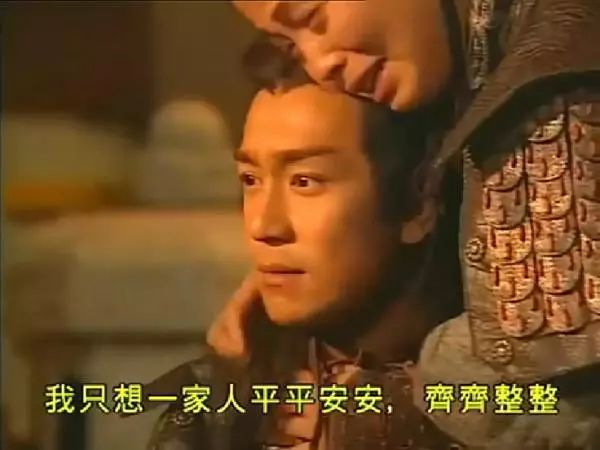
In these 40 years, it is still worth mentioning that the adaptation of "What makes the sea" is the Hong Kong version of the 2001 Romance of the Gods. Limited by funds and manpower, the costumes and props of the Hong Kong version of "The List of Gods" are very rough, and now the pictures are very old, but from the perspective of "drama", it is doing very well. On the surface, it is a ghost drama and a joke drama, but it is actually a family drama (especially the part about Nezha), which tells the softest part of Chinese’s heart through the shell of ghosts and gods.

Many viewers will empathize with this drama, because when they see King-Tan Yuen as Nezha’s mother who broke her heart for her son, they want nothing decent. What they think of is the image of the hardworking Chinese mother. When they saw Nezha, they were worried about prejudice. Later, they were moved by their mother, and realized their responsibilities and destiny. Later, they did not hesitate to cut the bones and return the meat to their father. What they saw was actually a classic China juvenile growth model, and they saw how a person who seemed to bear the original sin could find the meaning of his life with the help of his mother and two or three friends in adversity.

Those touching moments were not the show-off of technology and the cruel war, but what Nezha said when she was beaten while crying in the heavy rain. After returning the kindness of the Li family, she carried on with pride and reluctance. Even Su Daji and Shen Gongbao, the "villains", are not simply evil, but the inherent prejudice in the world, the stigma and transformation of women in a patriarchal society …Therefore, the list of gods has been remake so many times, and the most touching is still the Hong Kong version with the most crude technology, because it really understands people’s hearts and because it has a warm gaze on everyone.

Nezha captures Chinese’s emotional weakness.

Nezha goes a step further than the Hong Kong version of The List of Gods, because it gives consideration to both film aesthetics and shaping people. From the characterization of Nezha, Ao Bing, Taiyi Zhenren, Shen Gongbao and other characters, to the volume "Jiangshan Country Map" in Taiyi Zhenren’s hand, and the extensive use of lotus images, "Nezha" has its own unique film aesthetics, fresh, freehand brushwork, market atmosphere, and a "burning" from the desire to change fate, which fits the aesthetic tendency of mainstream groups.

It is an animation, but it is not naive. The reason why it can become a movie that can be watched by all ages, women and children is because its starting point is in line with Chinese’s emotional demands, prejudice and identity, individuals and families, desire to change their destiny, and hatred of identity discrimination. The scenes of Nezha hit the audience’s emotional weakness, especially when Nezha saw his father Li Jing’s willingness to make sacrifices for him and resolutely turned back to rescue Chen Tangguan, and then there was "Yes" This film is very clever in emotional progression, the loose place is loose, and the tight place is tight. Although some "golden sentences" are too much, which affects the overall flexibility, the shortcomings do not cover up, and its application of emotion is no less than that of animation masterpieces such as Travel around Dreams and Travel around Flying Houses.      

In the new version of Nezha, Li Jing has been changed into a modern father. He is no longer exclusive and overbearing to Nezha, but actively seeks a kind of gentle and equal communication. Even if Nezha makes Chentang close, he will not hesitate to give up his feelings and help Nezha get the world’s recognition.Li Jing has become a modern loving father, and his relationship with his wife and Nezha is actually very close to our modern life, which is why many viewers are moved by it.      

At the same time, Nezha’s rewriting of Ao Bing is also brilliant. In the inherent myth narrative, the third prince of the Dragon Palace, Aobing, went to Chentangguan to plead guilty because of his troubles, and was killed and cramped by Nezha, and his soul returned to the altar. This character is faceless, and it is difficult to get the sympathy of the audience. However, Nezha skillfully uses the stems of prejudice and identity, and through the exchange of "Lingzhu" and "Magic Pill", it makes Ao Bing bear the heavy responsibility of the whole dragon from his birth. The dragon is a monster in the eyes of the world, and the dragon king is eager for Ao Bing to ascend to immortality and wash away the shame of the dragon. The innate prejudice makes him suffer, and he is harmonious.      

The adaptation of Nezha tends to be warm, because the original is a bloody and tyrannical story, the relationship between Nezha and Excavate is full of confrontation and estrangement, Excavate is bossy, and Nezha is a "bad boy" who abuses violence. If we copy the original, not to mention the lack of novelty, many viewers will not understand it. However, the logic of this edition of Nezha is clear, and the interaction between Li Jing, Yin Shiniang and Nezha is also very appropriate. Looking at the adaptation history of "What makes the sea", this edition of Nezha is the most suitable film for the whole family to see.

Of course, Nezha has its flaws. For example, the hatred of Nezha by the people in Chentangguan in the film is somewhat abrupt, but it is actually related to deletion. Director jiaozi said: "There is a scene in which Mrs. Yin did not accompany Nezha to kick shuttlecock, but went to eradicate eel essence. We designed a scene in which eel essence caused considerable harm to local people. There was an old woman crying with her granddaughter’s body in her arms. Her granddaughter and son were both killed by goblins. Therefore, the people in Chentangguan have a deep hatred for monsters, which can be said to be a mortal enemy. But maybe now everyone will think that the people are a little idle when watching movies. After all, the film length is limited, and we can only do some giving up. "

Nezha still needs to be improved, such as the suitability of dubbing and characters, line design, etc. But what is certain is that it will leave a name in the history of animated films in China. Without a lot of publicity and famous actors in the early stage, the popularity of Nezha is a victory in the quality of the works and has a positive effect on the whole market. Because it released a signal: China audiences are paying more and more attention to the quality of the film itself, and the world has been suffering for a long time. It is more cost-effective to come up with a good book and launch a good work with your heart than to save enough money to flatter the stars. This is no longer an era when bad films can easily fool people. What we want to see is more works with such intentions as Nezha.

The first draft of this article was published in The Paper You Xi column.

There are a lot of additions and deletions in the second draft.

Editor: Karaoui

Image: Network

Cultural observer of the times

International community: Thanks to China for sharing its anti-epidemic experience and assisting other countries.

  CCTV News:In the face of the COVID-19 epidemic, China’s top-down efforts to fight the epidemic have attracted the attention of the whole world. Over the past few days, people from all walks of life in many countries have expressed that the China government has taken effective and efficient measures to fight the COVID-19 epidemic, and thanked China for sharing its valuable epidemic prevention experience with the world.

  Former US Assistant Secretary of State CampbellI think the efficiency of virus detection in the United States is not enough, and the unprecedented strict measures taken by China have bought us time. Have we used this time effectively? I think we don’t know what will happen every day. I think we need more cooperation.

  People from many countries said that China shared its experience in fighting the epidemic with other countries and extended a helping hand to countries in need. They expressed their gratitude and appreciation for this.

  Iranian Ministry of Health spokesman JahanpurIn the past, China has accumulated rich experience in fighting the epidemic and shared it with us selflessly. After the Iranian national mobilization plan was implemented, China experts provided many valuable suggestions and gave us confidence. We can learn from China’s experience in prevention, control, treatment and care for critically ill patients, which buys us time and allows us to avoid detours.

  Japanese Komeito Party representative Natsuo YamaguchiI think the prevention and control measures taken by China are very quick, decisive and positive. Chairman Supreme Leader played a leading role in the fight against epidemic in China, and I sincerely respect him. Qi Xin, an ordinary citizen in China, made concerted efforts to overcome difficulties, which made these measures effective. China also shared his experience in epidemic prevention and control with other countries in various ways, such as video and internet. We are very grateful for this. Now, Japan is learning to take some effective measures by using the experience and data obtained in China.

Head of the WHO expert group visiting China: China’s anti-epidemic approach can be replicated, but it needs speed, capital, imagination and political courage.

  The picture was taken from The New York Times and the character was Bruce Aylward.

  On March 4th, local time, The New York Times, USA published an interview with Bruce Aylward, head of the WHO expert group visiting China. Aylward introduced what he learned during his trip to China.

  When asked whether the number of cases in China is really decreasing, Aylward said frankly, "I know some people doubt it.". He said that everywhere he visited, he said that compared with the peak of the epidemic in China, the situation was very different. Before that, about 46,000 people asked for testing every day, but when he left China, this number dropped to about 13,000 people every day.

  One of the shelter hospitals in Wuhan, source: China Daily.

  "I don’t see any signs of manipulating the data." Aylward further responded: "The epidemic has stabilized and the progress is faster than expected."

  He also said: "China’s strict prevention and control measures have saved hundreds of thousands of Chinese from infection.".

  Aylward compared the differences between China and the United States in epidemic detection: in hospitals in China, each CT machine performs about 200 scans a day, and each scan takes about 5-10 minutes. In western countries, a hospital scans about 1-2 times per hour.

  China shortened the time of PCR test to four hours, and not long ago, when completing the same test, the United States still needed to send all samples to the designated location in Atlanta.

  In view of the problem of treatment cost that the American people are generally concerned about, Aylward also made a comparison: the China administration made it clear that the test is free. After the medical insurance of the diagnosed patient is full, the state will bear all the treatment expenses.

  In contrast, Aylward believes that the current health care system in the United States "has speed obstacles". The high cost of testing and treatment has caused many people to delay treatment because of hesitation, which is also very unfavorable for preventing and controlling the further spread of the epidemic.

  In addition, Aylward also mentioned other prevention and control measures in China, such as home isolation, "closing the city" and closing schools.

  At the end of the interview, a reporter from The New York Times asked: "Isn’t all this impossible in the United States?" "Isn’t China able to do this because it is an authoritarian country?"

  The picture was taken from The New York Times.

  Aylward responded to this kind of statement: "(Some Western) journalists will say that people cooperate with prevention and control measures out of fear of the government, and the China government is like a demon that will breathe fire and swallow babies." But I have also talked with many people outside the system — — In hotels, trains, and streets.

  Aylward said that China’s preparations for the epidemic are nationwide. "People have such a strong belief: ‘ We must help Wuhan ’ , not ‘ Wuhan has brought us to this point ’ . Other provinces sent 40,000 medical workers, many of whom volunteered. "

  "They are mobilized like a war, and what drives them is the fear of the virus. They believe that they are standing on the front line and believe that their actions are defending other parts of China and the whole world. "

Beijing Municipal Education Commission: Each primary and secondary school should be equipped with at least one full-time mental health education teacher.

  According to the website of the Beijing Municipal Education Commission on October 9th, the Beijing Municipal Education Commission issued the Notice on Strengthening the Management of Mental Health of Primary and Secondary School Students, proposing to establish and improve the grading early warning and intervention mechanism for students’ psychological crisis. For students with psychological problems found in their daily work and psychological assessment, the school should organize relevant professionals inside and outside the school to make judgments, work with parents to formulate targeted intervention plans, make timely adjustments, and dynamically track the effectiveness of intervention. When students have serious psychological crisis, such as suicide, self-injury, wounding and destroying things, the school promptly assists parents to send them to the hospital for medical treatment. Each school in primary and secondary schools should be equipped with at least one full-time mental health education teacher. Schools with more than 500 students, schools run by groups, and schools run by multiple schools should appropriately increase the number of psychological teachers.

  The full text is as follows:

  Notice of Beijing Municipal Education Commission on Strengthening the Management of Mental Health of Primary and Secondary School Students

  In order to implement the Notice of the General Office of the Ministry of Education on Strengthening the Management of Students’ Mental Health (No.10 [2021] of the Department of Education and Political Affairs), promote the construction of a trinity mental health education system of "school, family and society", effectively strengthen professional support and scientific management, further improve the pertinence and effectiveness of students’ mental health work, focus on improving students’ mental health literacy, and enhance their ability to control their emotions, cope with setbacks and adapt to the environment, we hereby notify the relevant requirements.

  First, strengthen the source management, and comprehensively improve students’ mental health literacy.

  1. Strengthen the construction of mental health courses. Schools should play the role of the main channel of classroom teaching, help students master mental health knowledge and skills, and establish a sense of self-help, mutual assistance and help. According to the requirements of full grade coverage, mental health education is carried out in the form of mental health education activity classes, class team meetings, group counseling, psychological training, special education activities, special lectures, etc., and mental health education classes are included in the school-based curriculum. Strengthen mental health education at important time points such as freshmen’s entrance, graduation, and before and after mid-term and final exams. In strict accordance with the Outline of Mental Health Education for Primary and Secondary Schools in Beijing (Revised), the contents of mental health education are implemented, and at the same time, various forms of life education and frustration education are arranged to guide students to learn to face setbacks and difficulties rationally.

  2. Vigorously cultivate students’ positive psychological quality. Adhere to the unity of mental health education and ideological and moral education, guide students to establish lofty ideals, cultivate feelings of home and country, inherit the spirit of struggle, and cultivate a positive and optimistic attitude towards life and perseverance. Give full play to the important role of physical education, aesthetic education, labor education and campus culture, and promote the healthy development of students’ psychology in all directions. Strictly implement the rigid requirements of physical education class and aesthetic education, actively promote Chinese traditional sports, extensively carry out popular sports and rich artistic practice activities, systematically strengthen labor education in combination with the characteristics of each school segment, and attract students to actively participate in various healthy and progressive campus cultural life and student club activities. Through publicity window, corridor display board, electronic screen, class blackboard newspaper, etc., we will carry out popular science propaganda on mental health, effectively cultivate students’ psychological quality of cherishing and loving life, and enhance their sense of responsibility and mission.

  3. Classify and channel various pressures as early as possible. Adhere to the combination of development-oriented and preventive intervention, and take active measures to avoid psychological crisis caused by stress that cannot be alleviated in view of the psychological imbalance that students may encounter in study, life, interpersonal relationship and self-awareness. Pay attention to caring for and helping students who encounter difficulties in learning and have poor academic performance. Teachers should give individual guidance in time, encourage peer assistance among students, and help students relieve psychological pressure and boost their learning confidence. Pay timely attention to students with financial difficulties, students from single-parent families, students with physical disabilities or serious health problems, left-behind children and migrant children, care about students’ lives, and foresee and effectively solve students’ psychological problems. Timely understand the difficulties and problems that students encounter in interpersonal communication and collective life, and carry out targeted individual conversations and group counseling to help students establish a correct outlook on life and values.

  4. Strengthen the joint efforts of schools, families and social education. Adhere to the school-led and multi-party cooperation to promote. The school timely understands whether students have early psychological trauma, major family changes, and tense parent-child relationship, and actively seeks effective support from students’ family members and related personnel. Through parents’ school, home visits and other forms, help parents understand the psychological characteristics and laws of their children’s age, guide parents to pay scientific attention to and care for students’ mental health, create a good family atmosphere, improve their awareness and ability to identify and deal with children’s psychological problems, and prevent children’s psychological problems from being caused by family conflicts or improper education methods. Make full use of radio, television, online media and other platforms and channels to spread mental health knowledge and actively create a social environment conducive to the healthy growth of students.

  Two, strengthen the process management, improve the ability of early detection and the level of daily counseling.

  5. Do a good job in mental health assessment. Actively rely on professional strength and means, regularly carry out students’ mental health assessment, improve the screening and early warning mechanism, and implement accurate intervention as soon as possible. District education committees should set up or rely on relevant professional institutions to take the lead in organizing primary and secondary schools in the region to carry out mental health assessment, conduct a mental health assessment for senior primary schools, junior high schools and senior high schools every year, establish and enrich students’ mental health database, guide schools to scientifically use the results of students’ mental health assessment, and promote the establishment of "one life, one policy" psychological growth files. For students with obvious psychological problems, we should strengthen the construction and management of students’ psychological files.

  6. Strengthen daily early warning and prevention. Schools should establish "classes — Grade — The school’s three-level early warning information reporting mechanism ensures that students’ psychological crisis can be warned, reported and handled in time. In-depth promotion of on-the-spot home visits, at least once a semester for students who need to pay attention to life difficulties, learning difficulties or mental health problems. When students are found to have major changes in their thinking, great fluctuations in their studies, major changes, major setbacks and obvious anomalies, they should conduct home visits in time and record the communication between home and school in students’ psychological files. Mental health teachers and class teachers should communicate closely with parents to strengthen psychological counseling and help children tide over the difficulties. Students with extreme behavioral tendencies should be given timely intervention and help.

  7. Strengthen psychological counseling services. Establish a three-level psychological counseling service platform for cities, districts and schools. We will build and make good use of the online psychological counseling service platform for teachers and students of Beijing Digital Moral Education Network for primary and secondary schools and the 12355 youth psychological counseling service hotline. The District Education Commission should establish a district-level psychological counseling center for primary and secondary school students, provide immediate psychological counseling for primary and secondary school students in the whole district after class, on weekends and holidays, and provide a 24-hour message platform for psychological problems through websites, WeChat WeChat official account and other channels to answer students’ psychological puzzles in time. All schools should improve the system of duty and appointment for psychological counseling, and meet the needs of students for counseling and help through interviews and telephone calls. Intensify publicity to improve the awareness rate of parents of teachers and students on psychological counseling channels in cities, districts and schools.

  Third, strengthen the management of results and improve the ability of psychological crisis intervention and disposal.

  8. Vigorously build a cooperative intervention mechanism between home and school. Establish and improve the grading early warning and intervention mechanism for students’ psychological crisis. For students with psychological problems found in daily work and psychological evaluation, the school should organize relevant professionals inside and outside the school to make judgments, work with parents to formulate targeted intervention plans, make timely adjustments, and dynamically track the effectiveness of intervention. When students have serious psychological crisis, such as suicide, self-injury, wounding and destroying things, the school promptly assists parents to send them to the hospital for medical treatment.

  9. Actively seek cooperation and support from professional institutions. District education committees and schools should strengthen coordination with health departments, establish a support and cooperation mechanism for mental health education and psychological crisis intervention in schools by mental health medical institutions, and provide professional psychological counseling or psychotherapy for primary and secondary schools. For students with serious psychological crisis beyond the ability of school counseling and intervention, the school should assist parents and refer them to professional institutions for diagnosis and treatment in time.

  10. Do a good job in the aftermath of student emergencies. After a student has an accident at school due to psychological problems, the school should immediately start the emergency work plan, contact the parents of the students at the first time, and verify the situation and deal with it in time under the guidance of the District Education Commission and the public security departments. In response to possible social concerns, schools should respond in a timely manner in accordance with the principle of openness and transparency, and strive for the support of online information, public security and other departments to do a good job together.

  Fourth, strengthen security management and increase comprehensive support.

  11. Complete and build a strong backbone team. Each school in primary and secondary schools is equipped with at least one full-time mental health education teacher. On the basis of ensuring the number of full-time psychological teachers, part-time psychological teachers can be equipped according to the actual situation and work needs. Schools with more than 500 students, schools run by groups and schools run by one school with multiple addresses should appropriately increase the allocation of psychological teachers. In principle, full-time psychological teachers should have a bachelor degree or above in psychology or related majors, and part-time psychological teachers must undergo professional training or have professional qualifications for mental health education. To improve the supporting ability of head teachers’ mental health education, primary and secondary schools should focus on mental health education as a compulsory content in pre-job training, professional training and daily training for head teachers and teachers of various disciplines. All faculty and staff of the school should establish the consciousness of paying attention to students’ mental health, and inform the class teacher and psychological teacher in time if they find that students have abnormal psychology or behavior.

  12 to strengthen the construction of mental health education research team. Build a full-time and part-time teaching and research team of mental health education at the municipal level, establish and improve the regular supervision mechanism of mental health education in primary and secondary schools, adhere to and improve the exchange mechanism of research results of mental health education, promote the construction of characteristic schools of mental health education, enhance the professional level of mental health education, and promote the standardized and scientific development of mental health education. Education, research and training departments in all districts should be fully equipped with full-time psychological teaching and research staff, and establish a long-term mechanism for teaching, research and training. Support qualified schools to set up psychological teaching and research groups and carry out regular activities.

  13. Increase the support of psychological teachers. Support psychological teachers to participate in activities such as study, further study, training and communication, improve the professional skills of mental health education, and promote the professional development of psychological teachers. According to the actual situation of the school, all kinds of mental health education lectures, theme activities and psychological counseling for students, parents and teachers will be included in the workload and included in the performance management to ensure that full-time psychological teachers enjoy the same treatment as class teachers. Part-time psychological teachers calculate the workload according to the relevant regulations of the school and guarantee the corresponding treatment.

  14. Ensure the site and funds. The District Education Commission should equip the district-level psychological counseling center for primary and secondary school students with special space and hardware and software equipment, and further promote the construction of psychological counseling rooms for primary and secondary schools in accordance with the requirements of the Ministry of Education’s Guide to the Construction of Psychological Counseling Rooms for Primary and Secondary Schools. Improve the system of psychological counseling on duty, appointment, interview, etc., to ensure students’ psychological counseling and help-seeking needs. During the period when students are in school, the psychological counseling room should be open to students every day during recess, after class and other non-class hours, and teachers with psychological counseling qualifications should be arranged to be on duty. All districts and schools should ensure the daily operation of mental health education and the funds for equipment configuration, operation and maintenance and team building. All districts should fully guarantee the funds for mental health education and establish a growth mechanism as appropriate. Schools should co-ordinate all kinds of funds in the annual budget to ensure the funds for mental health education.

72-year-old sanitation worker donates 10,000 yuan anonymously to typhoon-stricken areas: I just want to make a contribution silently.

  Affected by Typhoon Likima, a serious flood disaster occurred in Ningguo City, Anhui Province recently, and more than 110,000 people were affected. After the disaster, there was a warm heart scene: on August 14th, the office of Ningguo Municipal People’s Government received five "registered letters", each containing 2,000 yuan, a total of 10,000 yuan in donations, all of which were signed "Zhufeng Town Pingyi". Immediately, the local authorities started a spontaneous relay to find the anonymous donor. With the exposure of anonymous’s true identity, the donor who moved Ningguo has moved China.

  Who is he?

  Five anonymous donation letters triggered a search for good people in the city.

  Affected by typhoon "Lichima", flash floods broke out in many places in Ningguo, Anhui Province recently, and roads were destroyed and houses collapsed, causing more than 110,000 people to be affected. After the disaster, at 4: 00 pm on August 14th, the office of Ningguo Municipal People’s Government received five registered letters: each envelope contained 2,000 yuan, totaling 10,000 yuan, all signed as "Zhufeng Town Pingyi".

  The staff of the Ningguo People’s Government Office told the Beijing Youth Daily reporter: "The letter is anonymous and there is no indication of the purpose of the money, but we speculate that it should be a donation." After the news of anonymous donation was exposed, it attracted the attention of local netizens. Everyone forwarded the tracing message one after another, wondering who the donor named "Zhufeng Town Pingyi" was, and even more wanting to know the story behind the anonymous donor.

  "We immediately found the post office where the letter was sent through the postmark." The staff said that they learned from the surveillance video of Ningguo East Post Hall that the letter was sent on August 13th, and the sender was an old man with the words "Ningguo Sanitation" printed on his clothes.

  "Everyone attaches great importance to this matter and immediately entrusts us to find someone." The relevant staff of Ningguo Urban Management Law Enforcement Bureau told the reporter of Beiqing Daily that because the surveillance video was relatively clear, the Environmental Sanitation Department immediately organized the heads of various companies to identify and basically confirmed the identity of the elderly. The old man named Le Jinmei, 72 years old, lives in Hongjiata Village, Wayaopu Village, Zhufeng Street, and is a sanitation worker.

  found it

  Old people are usually very frugal, and their families are sick and embarrassed.

  When the Urban Management Law Enforcement Bureau initially determined that the old man who donated money was Le Jinmei, Director Li of the Civilization Office of Zhufeng Sub-district Office visited the house. "He is an ordinary sanitation worker, his family is not rich, and his walls are all rough and cement."

  On August 16th, the reporter of Beiqing Daily contacted Le Fazhi, the son of Le Jinmei, an old man who donated money. "My father took advantage of his family to donate10,000 yuan, and the family only knew about it after seeing the tracing information in the circle of friends." Le Fazhi said that although he confirmed that it was his father at the first sight when he saw the video, he still couldn’t believe it. "He didn’t admit that he donated money at first. I asked again and again before he told me that the money was donated to the villagers affected by the typhoon."

  "When I first learned the news of my father’s donation, my family didn’t quite understand it." Le Fazhi said frankly, "The family’s economic situation is not very good, and 10,000 yuan is not a small amount for us." Le Fazhi told the reporter of Beiqing Daily that his father had been a sanitation worker for more than ten years. "He had been farming at home before, and later, because he was too old to do farm work, he began to work as a sanitation worker to support his family." According to Le Fazhi, my father’s monthly salary and meal allowance add up to only 2,065 yuan. "He is reluctant to spend money himself at ordinary times, and he can carry it when he is sick. The money saved should be saved."

  Talking about the recent situation at home, Le Fazhi said: "The family has not been calm recently and spent a lot of money." His mother broke her hand when she fell last year, and his wife was diagnosed with nasopharyngeal carcinoma at the beginning of this year. The treatment has cost about 150,000 yuan. When the reporter of Beiqing Daily contacted Le Fazhi, he was working in a chicken farm. "I went out to work at 9 o’clock last night, and I couldn’t go home all night. Our family are farmers and earn hard money." When talking about his wife’s follow-up treatment expenses, Le Fazhi said: "The current economic situation can still be sustained. Let’s take it one step at a time."

  Too touched

  I just want to make a silent contribution. The donation has been used for disaster relief.

  Although the father donated money behind his family’s back, the old man’s explanation afterwards convinced him to be happy. In 1991, Le Fazhi’s family was flooded. With the help of all walks of life, the collapsed river bank in the village was rebuilt, and every household received rice distributed by the government. "Our family weathered the storm with the help of everyone. My father is old and always wants to make some contributions to society."

  Le Fazhi said that when the typhoon hit, my father learned about the collapse of houses in the mountains through TV, and many people lost contact because of the flood. "Compared with the people affected by the disaster, although our family has poor economic conditions, at least the whole family is together, and my father wants to do his little to help them." Le Fazhi also told the reporter, "Zhufeng Town is the place name here, because it needs to be signed when sending a letter, so he improvised ‘ Pingyi ’ This fake name. "

  When it comes to this father’s donation, Le Fazhi is not surprised when he thinks about it. "This is not the first time my father has done good deeds. In the 1980s, my father donated money to Shuguang Primary School in the village to help the school transform its teaching facilities. In the early 1990 s, the Fangkengwu Group repaired the bridge, and the poor father also donated more than 200 yuan. " For his father’s repeated donations, Le Fazhi said that he only learned after listening to others. "My father quietly donated without telling us."

  "This time, he is the same. He just wants to do something for the people affected by the disaster and doesn’t want others to know." Le Fazhi told the reporter of Beiqing Daily that Le Jinmei did not expect that everyone would find him through the monitoring of the post office. "My father is very embarrassed now. He never thought that doing this would have such a big impact."

  The relevant staff of the Ningguo People’s Government Office said that at present, donations from the elderly have been donated to charitable associations for local disaster relief work.

  Text/reporter Zhang Ya Intern reporter Zhao Yihan

  Co-ordination/Chi Haibo

The game of decompression makes young people fall in love with martial arts

    Qingchunpai chaoliu

  Not long ago, a "autumn soldier on the battlefield" was staged at the National Hockey Training Center. Twenty young people were divided into two groups and held "weapons" to fight. Although the "weapons" in their hands are made according to ancient weapons, they are made of soft rubber and sponge, and players are all protected by hard helmets and masks. Recently, this new outdoor competitive game named "Weapon Fighting" has become popular among young people in Beijing, Shanghai and other cities. Decompression and socializing are the most attractive places for the participants. The founders and organizers of this sport hope that through the popularization of this sport, people will fall in love with China traditional martial arts.

  Participants wear helmets and masks "weapons" that have been lightweight.

  The rules of the game are very simple, that is, use the "weapons" held to annihilate each other. The standard of "destroying the enemy" is not complicated, and it hits the effective part — — Head and torso, even if you win. During the game, participants should wear helmets and masks.

  Weapons include short knives, short swords, long swords, spears, bows and arrows and javelin. Players can assign "weapons", arrange formations and set tactics according to their own situations.

  In the "match" held in the National Hockey Training Center, more than half of the young people who came to participate were trying for the first time, and most of them had no professional training foundation such as fighting, fighting or kendo. The old players demonstrated the bow and arrow test firing and the use of the sword and shield and the long weapon to the novices, and then the battle began.

  The red and white sides are each composed of more than ten people, each of whom chooses his own "weapon" according to the rules. The two sides stand at both ends of the court, and after the game begins, they line up and walk towards each other. When the two sides came to a distance of about 5 meters, the vanguard teams of the two sides had "hand-to-hand combat", each holding a "shield" to cover his chest and constantly using a "sword" to test forward. The "weapons" in the players’ hands have been lightened, paying more attention to safety.

  "Red 10 is hit, down." "White No.6, down." The referee on duty will always pay attention to the players’ offensive and defensive progress and report the situation at any time. At the end of the first game of annihilation, there was only one female warrior in gray sportswear left in White, but she was faced with three people in Red: a boy of about 10 years old, a female warrior and a male warrior.

  The red male warrior is stocky and obviously has the strength advantage, and neither side dares to make moves easily. After wandering around the circle, the male warrior suddenly makes moves, and the female warrior in white fails to lift the other side’s "sword" because of physical exhaustion, so the "weapons" of both sides are twisted together.

  After the referee stopped the game, he asked whether the two sides were hit by each other. The female warrior in white took the initiative to raise her hand, and the other party touched herself first. Although there was no "counterattack" success in the case of one against three, the white female warrior still won applause.

  Subsequently, the two sides tried to join the offensive and defensive warfare of "spear" and "bow and arrow". The red and white sides have their own winners and losers. When they take off their helmets, some of them are panting, and some of them are still wanting more.

  Young people come together to "socialize while exercising"

  "Don’t see ‘ Bow and arrow ’ Where you come from, you are heroic ‘ Sacrifice ’ Yes. " One player said that when he charged, he lowered his center of gravity, swam left and right, and protected his chest with a "shield", but he soon felt that his leg was shot. After a few games, this player is obviously in a hurry. Taking part in this sport, his most intuitive feeling is: "The war is too cruel."

  Beibei, a female warrior in the last battle of annihilation, felt that the sport had high demands on both physical strength and brain power, and even a greater test on brain power. She believes that the collocation of "weapons" is very knowledgeable. On the court, we should not only observe the surroundings at all times, but also pay attention to teamwork. At the same time, everyone should find a good role according to their own characteristics. "I thought it was just fooling around at first, but later it felt like a video game, and I really paid attention to cooperation and strategy."

  Beibei insists on exercising all the year round. Besides going to the gym often, she often plays badminton. She thinks her physical fitness is not bad, but after playing a game, she obviously feels a lot of physical load.

  This time, Beibei came to experience it with her husband and several friends. Several of her friends first saw the video of "Fighting with Cold Weapons" on the Internet, and learned that there were clubs in Beijing also engaged in activities, so they came from Tianjin to play. After this activity, several people thought that glad you came planned to participate again if there was an opportunity.

  Beibei’s husband concluded that there are actually some winning skills in this sport, that is, to arrange one’s own formation reasonably, and not to be attracted by people who detour from both sides, resulting in scattered "forces." Beibei thinks that this sport is especially suitable for young people to socialize, especially for coming together or gathering with friends. It will be very interesting for everyone to form a team to complete a "fighting".

  Xiaomi also came to participate in the "fighting" with her boyfriend. Before she came, she was ready to be hurt. However, after the "war", she found that the safety of this sport is still quite high, with helmet protection, and "weapons" are also soft. The most likely injury is falling or spraining your ankle when moving.

  Before the activity began, Xiaomi accepted the guidance of the old players seriously. At first, she used to put the "shield" on her chest to protect herself. Later, she understood that it was necessary to block the opponent’s "weapons" with the "shield" grid to attack better. By learning now and selling now, she also won many people.

  Xiaomi believes that this project is quite decompression, and social attributes are an important reason for the rapid development of this sport. "Socializing while exercising." In addition, the rules of this sport take care of everyone, there is almost no gender difference, and people of any gender and age can have a good sense of participation.

  The game provides a "real combat" platform for martial arts lovers.

  Xiaomi’s boyfriend, Cheng Yuan, is a martial arts enthusiast. He has learned Xingyiquan and pike, and he is comfortable in the activity and has become the "killing king" of this activity. However, Cheng Yuan believes that this game will not take too much advantage for "practicing the family", especially if everyone is familiar with it, the advantage of people with martial arts foundation will be reduced. Because when they get familiar with each other, the role of tactics will be amplified.

  From the perspective of martial arts lovers, Cheng Yuan also highly praises this sport. He feels that this sport has given martial arts lovers like himself a platform for actual combat. "After I have studied martial arts, I can’t find a suitable performance outlet. There are one-on-one and team battles in this sport, which allows us martial arts lovers to give a full play."

  Cheng Yuan believes that this activity is just emerging at present, and the future trend, whether competitive or popular, is helpful for young people in contemporary society to keep fit. In addition, it can also enhance people’s skills and awareness of protecting themselves.

  "During the activity, I found that some players completed ‘ Kill ’ After that, I relaxed, and as a result, I was stabbed by my opponent. If you participate in this sport more, you may better protect yourself in case of any sudden danger in reality. " Cheng Yuan said.

  The founder said that the original intention of the game was to "awaken Chinese traditional martial arts culture"

  "Awakening Chinese traditional Wushu culture" is one of the original intentions of this project. Da Pan is one of the founders of this sport. He is a tall martial arts enthusiast and a worker in the sports industry. For a long time, he felt that modern martial arts have competition, performance and fitness, but young people often learn boxing, fencing and taekwondo from abroad.

  "As a traditional martial arts country, we have not been able to inherit the martial arts projects that people are willing to participate in, which makes me unwilling." Dapan said. Therefore, in the three years from 2017 to 2019, Dapan paid his own money to visit the martial arts schools and martial arts schools in Songshan, Henan, Cangzhou, Hebei, Foshan, Guangdong, Shanghai, Shandong and other traditional martial arts places. He found that the most important reason is that China’s traditional Wushu is seriously divorced from the market, and the public can’t feel the sense of participation. Wushu is confined to two small fields: fitness for the elderly and athletes’ competition, and a large number of Wushu lovers have no platform for convenient activities.

  "Fencing, taekwondo why good enrollment, because people are interesting, the steps are lower, children are willing to learn. Therefore, martial arts should also lower its posture and go to the people. " Da Pan said that after the inspection, he and several friends began to study martial arts sports that could be accepted by the public and named the project "Integrated Weapon Fighting". The principle of the project is that everyone can participate, and men, women and children can find happiness in it. Since everyone is engaged in sports, the first edition of the rules was soon worked out. The rules advocate that women, children or people with poor physical fitness should also have a chance to survive.

  Later, Dapan found a friend who was engaged in computer game development, and made a gamification modification to the project rules. By borrowing the scoring form in the game, he stipulated that all kinds of "weapons" were given different scores according to their length, weight and attack distance. Each participant could choose their own "weapons", but the total score could not exceed 8 points.

  In the design of "weapons", Dapan and his friends also took great pains. First, they consulted historical materials, designed the shape according to the size and length of China’s traditional weapons, and then made corresponding lightweight improvements.

  In order to ensure safety, they cut the inner cores of various attack "weapons" to ensure that after excessive force, the cut parts of "weapons" will break first without hurting users.

  "We hope these ‘ Weapons ’ Just like football and skateboarding, it is easy to carry, put it in a backpack or trunk, and it is convenient to invite a few friends to play at any time ‘ Fighting ’ 。” Dapan said.

  "Weapon Fighting" gradually promoted three clubs to form an alliance.

  After this spring, the "weapon fighting" project was gradually popularized. Many young people have learned about this new social sport through the Internet, and more and more young people are trying and experiencing it. Most of the activities that have been held are held in futsal, rugby or hockey fields.

  "In fact, it’s not us ‘ Seize the football field ’ The main reason is that the size of the five-a-side football field is appropriate, and the two restricted areas can just be used as our positions to arrange manpower, and there are generally barbed wire around the stadium to avoid our ‘ Weapons ’ Fly outside. " Dapan explained that the "weapon fighting" project actually has no particularly strict requirements on the venue, and it can be played anywhere.

  At present, Dapan and his friends have set up the club "Fighting with Integrated Weapons". Now, three clubs have formed an alliance called WMC, in which clubs can compete with each other and players can recognize each other’s points. At the same time, there are clubs engaged in similar projects in Shanghai and Nanjing.

  Du Suantou (net name), the founder of Shanghai’s "Cold Weapons Offensive and Defensive Warfare", said that they began to try to play this project in 2022. At that time, he and several friends who practiced martial arts could not find a suitable platform for practicing martial arts. They were inspired when they played the offensive and defensive arrow project together, and then made rules of the game by referring to various similar games at home and abroad.

  Since this summer, they have been promoted in the market in the form of clubs. According to its introduction, their "cold weapon offensive and defensive warfare" is roughly the same as Beijing’s "integrated weapon fighting", but there are some differences in some details.

  "This project is now in the ascendant, and it is normal for different genres and ways of playing, just like playing mahjong cards, including Sichuan Mahjong, Beijing Mahjong and Guangdong Mahjong, but in the end there will be a unified rule to become a mahjong competitive sport."

  As for the same kind of activities in Shanghai and Nanjing, Da Pan, as the manager of the club "Fighting with Integrated Weapons", also thinks that this is a good thing from the perspective of making people accept martial arts. The rules of any game or sport should not be closed and should not belong to a club or some individuals.

  Da Pan believes that as a new sport, the rules of the game should be gradually improved in practice to learn from each other’s strengths, and finally it can be better accepted and passed down by the public. "This is also our original intention, that is, to make people like China traditional martial arts and awaken China traditional martial arts culture."

  Wenhe photo/reporter Zhang Ziyuan

  Coordinator/Lin Yan Zhang Bin

The college entrance examination countdown is 10 days! Come on!

Reporter: Zhang Ni

In another 10 days, the national college entrance examination in 2021 will officially kick off.

In view of this year’s college entrance examination, all localities have deployed ahead of schedule, and epidemic prevention and discipline examination are still the key tasks to be closely watched this year.

The college entrance examination returns to June, and the arrangements vary from place to place.

According to the notice previously issued by the Ministry of Education, the national college entrance examination in 2021 is scheduled to start on June 7. This is after the college entrance examination was postponed to July last year due to the COVID-19 epidemic, and the college entrance examination returned to June.

The specific subject examination schedule is: June 7, 9:00 to 11:30 Chinese; Math from 15:00 to 17:00. On June 8, from 9:00 to 11:30, liberal arts comprehensive/science comprehensive; Foreign languages from 15:00 to 17:00.

If there is a foreign language listening test, it should be arranged before the start of the written foreign language test. The names of examination subjects in all provinces (autonomous regions and municipalities) are the same as those in the national unified examination subjects, which must be consistent with the national unified examination schedule.

This year, the unified college entrance examination in Beijing will be held on June 7 and 8, and the general high school level grade examination will be held on June 9 and 10.

In Shandong, three national unified examination subjects (Chinese, Mathematics and Foreign Languages) will be held on June 7 -8, in which the foreign language listening test was successfully completed on January 8, and the foreign language test on June 8 only took the written part; The "6-for-3" ordinary high school level examination will be held on June 9 -10.

The examination time in Hunan is from June 7 to 9, lasting for three days. After the college entrance examination, students will be admitted according to the "3+1+2" mode.

8 places welcome new college entrance examination landing questions to enhance openness

This year, the new college entrance examination was launched in the third batch of comprehensive reform provinces such as Hebei, Liaoning, Jiangsu, Fujian, Hubei, Hunan, Guangdong and Chongqing.

According to the previously announced implementation plan, eight provinces will adopt the "3+1+2" model.

"3" is the national unified examination subject Chinese, mathematics and foreign languages, which all students must take; "1" is the preferred subject, and candidates must choose one of the physics and history subjects in the high school level examination; "2" is a re-selected subject, and candidates can choose two of the four subjects of chemistry, biology, ideology and politics and geography.

In addition to the above-mentioned provinces will usher in the new college entrance examination, the Ministry of Education has also put forward new requirements for this year’s college entrance examination papers.

In terms of propositions, according to the "Notice on Doing a Good Job in Enrollment of Colleges and Universities in 2021" previously issued by the Ministry of Education,In 2021, the college entrance examination proposition should strengthen the examination and guidance of students’ all-round development of morality, intelligence, physique, beauty and labor, enhance the openness and flexibility of examination questions, and guide to reduce the phenomenon of rote memorization and "mechanical brushing".

In addition, the Ministry of Education also proposed that the pilot universities of the Strong Foundation Program should improve the enrollment procedures and methods, and strive to select outstanding students who are "ambitious, interested and talented".

Safeguarding the fairness and justice of the college entrance examination and cracking down on the criminal activities of "helping the exam"

After ten years of hard study, I once went to to be no.1. The college entrance examination is related to the fate of every ordinary examinee, and how to maintain the fairness and justice of the college entrance examination is also the focus of social attention in recent years.

The notice previously issued by the Ministry of Education has clearly requested to strengthen the departmental cooperation mechanism.Focus on special actions such as purifying the network environment involved in the examination, cracking down on the sale of cheating equipment, purifying the surrounding environment of the test center, and cracking down on cheating for the test, and comprehensively manage the examination environment.

On May 8th, the Ministry of Education, together with relevant departments, held a national teleconference on the safety of college entrance examination. Chen Baosheng, Minister of Education, pointed out that it is necessary to crack down on the criminal activities of "helping exams", crack down on cheating in exams, and carry out in-depth education on honesty exams.

At the same time, on the eve of the college entrance examination, special actions have been carried out in various places one after another, and the discipline of the examination room has been closely watched.

For example, in Shandong, multi-departments have jointly launched special actions, including strict examination management, cracking down on the production and sale of cheating equipment, cracking down on illegal and criminal activities of cheating in examinations, cleaning up and rectifying training institutions for exam assistance, and purifying the network environment involved in exams.

Hunan requires that candidates should focus on the entrance clearance, and the security requirements should be put in place in accordance with the regulations to prevent candidates from carrying mobile phones and other high-tech cheating tools into the examination room.

At the same time, strengthen the identity verification of candidates, take multi-card verification, man-machine comparison, and conditionally take measures such as face recognition system to prevent substitute exams.

With the deputy examiner for epidemic prevention, vaccination … This year’s epidemic prevention is more stringent.

Last year, the special college entrance examination in the context of the epidemic situation still impressed many people vividly. This year, although the domestic epidemic situation has stabilized, the epidemic prevention work of the college entrance examination has been repeatedly emphasized.

In view of the epidemic prevention work in the examination room, the notice issued by the Ministry of Education requires strengthening epidemic prevention measures in places such as proposition writing, examination center examination room and marking, so as to ensure the life safety and health of the majority of candidates and examination staff.

In addition, the Ministry of Education also requires the daily temperature measurement and physical health monitoring of candidates and examiners.According to the requirements, each test center is equipped with an assistant examiner for epidemic prevention, necessary isolation examination rooms and facilities are set up, and sufficient epidemic prevention materials are equipped.

Conscientiously implement measures such as temperature detection, comprehensive disinfection, ventilation and spacing in the examination room.Carry out full coverage epidemic prevention education and training to ensure that all candidates and examiners are familiar with epidemic prevention knowledge and operation procedures.

In order to ensure the smooth progress of the national college entrance examination in 2021, all localities have also made epidemic prevention arrangements in advance.

For example, Jiangxi Education Examinations Institute has previously issued a notice, clarifying that this year’s college entrance examination will fully disinfect, ventilate and keep the distance between the examination rooms, and at the same time, carry out full coverage epidemic prevention education and epidemic prevention training.

In Shenyang, Liaoning, each test center has established a health and epidemic prevention group, which consists of an assistant examiner in charge of epidemic prevention, an epidemic prevention staff and a medical staff.

In addition, the faculty and staff of each test center will all be vaccinated with COVID-19 vaccine before the end of this month.

Push China-Egypt comprehensive strategic partnership to a new level (shared destiny)

  The entrance of China-Egypt TEDA Suez Economic and Trade Cooperation Zone.

  Egyptian workers are working in the production workshop of China Jushi Group Egyptian Glass Fiber Industry Company.  

  Our reporter Zhou Yushe

  On March 23, 2020, Chairman of the Supreme Leader and Egyptian President Seyce pointed out on the phone that China attaches great importance to developing China-Egypt relations and is willing to work together with Egypt to deepen pragmatic cooperation in various fields and make China-Egypt relations a model for building a community of destiny between China and Africa.

  This year marks the 65th anniversary of the establishment of diplomatic relations between China and Egypt. Egypt is the first Arab country and African country to establish diplomatic relations with New China. Sino-Egyptian relations are a model of solidarity, cooperation and mutual benefit between China and Africa. Over the past 65 years, China and Egypt have always helped each other and moved forward hand in hand. The relationship between the two countries has withstood the test of changing international situations and has always maintained healthy and stable development. With the joint construction of the "Belt and Road Initiative" deeply docking Egypt’s "Vision 2030", the traditional friendship and pragmatic cooperation between China and Egypt have been deepened, pushing China-Egypt comprehensive strategic partnership to a new level.

  Pragmatic cooperation has progressed steadily.

  In the vast desert 50 kilometers east of Cairo, the capital of Egypt, tall buildings are springing up. On the morning of June 17th, local time, the main structure of the sign tower in the Central Business District of Egypt’s new administrative capital, which was built by China enterprises, was capped. Egyptian Minister of Housing assim Gazal and Chinese guests jointly completed the concrete pouring of the last cubic meter of the sign tower. He said: "Today we have witnessed the achievements achieved by Egypt and China through cooperative efforts. We believe that this project today (officially capped) will become a new landmark in Egypt."

  In recent years, China and Egypt have strengthened the docking of development strategies, jointly built the "Belt and Road" and expanded cooperation in infrastructure construction, production capacity and science and technology. During the epidemic prevention and control period, China-Egypt pragmatic cooperation maintained a good momentum of development, and major cooperation projects were promoted in an orderly manner: on the Suez River, Egyptian enterprises were helping Egypt build container terminals; On the coast of the Red Sea, by the end of April this year, the TEDA Suez Economic and Trade Cooperation Zone jointly established by China and Egypt had attracted 102 enterprises to settle in, directly solving about 4,000 jobs, and the industry drove more than 36,000 jobs; In the aerospace field, the Egyptian satellite assembly integrated test center project signed by China and Egypt and the implementation agreement of Egypt-2 satellite are progressing simultaneously … …

  According to statistics of China Customs, in 2020, the import and export volume of bilateral goods between China and Egypt reached US$ 14.566 billion, up 10.34% year-on-year. Since 2013, China has been the largest trading partner of Egypt for eight consecutive years. In the first quarter of this year, the bilateral import and export volume of goods between China and Egypt was US$ 4.176 billion, an increase of 32.14% over the same period of last year, reaching a new record high.

  China has become the country with the most active investment in Egypt and the fastest growth rate in recent years. In 2020, China increased its direct investment in Egypt by 190 million US dollars, and its investment stock in Egypt exceeded 1.2 billion US dollars. In the first quarter of this year, China’s new direct investment in Egypt was US$ 83 million, up 134% year-on-year. At present, Chinese and Egyptian enterprises are discussing cooperation in the fields of electric vehicles, agriculture and smart transportation.

  "China welcomes more Egyptian enterprises to invest in Egypt and is willing to work with China to further enhance the comprehensive strategic partnership between Egypt and China." Sethi said.

  Humanities exchanges are closer.

  On June 15th, the unveiling ceremony of the "Chinese Bridge" club Cairo Station was held in Cairo. Mohammed Ayman ashur, Deputy Minister of Higher Education of Egypt, who attended the unveiling ceremony, said that Chinese has become one of the most important languages in the world. At present, young Egyptian students have spontaneously formed a craze for learning Chinese.

  Egypt is the first country in the Middle East and Africa to teach Chinese. At present, there are 16 Egyptian universities offering Chinese majors or courses. In May this year, the Egyptian Ministry of Education announced that 10 middle schools in Egypt will be used as pilot schools from next year, and Chinese will be offered as an optional course for the second foreign language. Gamar Elshali, vice president of Cairo University, said: "I hope that Chinese teaching will become a channel for cultural exchanges between the people of Egypt and China and promote the communication between the people."

  "Egypt-China cultural exchanges have a good foundation for cooperation." Mohammed Ersa, former deputy minister of information in Egypt, said that through frequent exchanges in the cultural fields between the two countries, the two peoples have enhanced mutual understanding and the friendship between Egypt and China has been deeply rooted in the hearts of the people.

  Over the past 65 years, people-to-people exchanges between China and Egypt have yielded fruitful results. According to data from the Egyptian Ministry of Tourism and Cultural Relics, China has become Egypt’s fourth largest source of tourists, with hundreds of thousands of China tourists visiting Egypt every year; By the end of 2019, more than 2,800 Egyptian students and 1,200 China students were studying in two countries; Last year, China and Egypt held 52 online cultural exchange activities, attracting nearly 10 million visitors and over 650,000 people to participate in the interaction … …

  During the epidemic prevention and control period, with the joint efforts of China and Egypt, two Luban workshops located at Ain Shams University in Egypt and Cairo Advanced Maintenance Technical School were completed as scheduled. At present, the teacher training for Egyptian teachers and the formulation of advanced training syllabus for junior high schools have been completed. "Egypt’s vocational and technical education is undergoing reform, and Luban Workshop has brought advanced educational concepts, teaching standards and training equipment." Mohammed Almugahed, Egyptian Deputy Minister of Education, Technology and Education, said.

  Mahmoud Alam, former Egyptian ambassador to China, said that with the docking of Egypt’s "Vision 2030" and the "One Belt, One Road" initiative, cultural exchanges between Egypt and China have become closer, laying the foundation for Egypt and China to jointly build a community of destiny and deepen comprehensive strategic partnership. Egypt-China cooperation has made great achievements in education, health and other fields.

  Anti-epidemic cooperation sets a good example

  An Arabic proverb says, "A friend who comes in trouble is a true friend." In the face of the challenge of the epidemic, China and Egypt have helped each other, written a new chapter in sharing weal and woe, and made contributions to promoting the construction of a healthy human community.

  During the critical period of China’s anti-epidemic, the Egyptian government and people expressed their firm support for China. Sethi sent Hala Zayed, Minister of Health and Population, as the special envoy of the President to visit China with anti-epidemic materials. Three world cultural heritage sites in Egypt lit up the "China Red" in the form of light shows and raised the five-star red flag to express their firm support for China.

  China is one of the earliest and largest countries to provide anti-epidemic assistance to Egypt. It has provided four batches of anti-epidemic aid materials to Egypt, provided the latest version of prevention and treatment plan as soon as possible, carried out many video exchanges between Chinese and Egyptian experts, established a counterpart cooperative hospital mechanism, and helped Egypt establish a mask production line. "Different states share weal and woe". The poem of the famous Egyptian poet Ahmed Shawgī vividly explains the friendship between the Chinese and Egyptian people in times of trouble and sharing weal and woe in the aid of the China government to Egypt’s anti-epidemic materials.

  China has provided two batches of vaccine assistance to Egypt and supported Egypt in purchasing Chinese vaccines. Egypt is one of the first countries to carry out Phase III clinical trials of Chinese medicine vaccine, and is cooperating with China in COVID-19 vaccine production.

  At the end of May this year, the "China-Africa Counterpart Hospital Cooperation Mechanism Project" was officially launched. jiangsu province hospital and Egypt Ain Shams University Hospital held a signing ceremony of the framework agreement cloud. The two sides will carry out pragmatic cooperation in remote consultation, personnel training and discipline construction. China will further help Egypt improve its epidemic prevention capacity and health service level, and promote the construction of China-Egypt and China-Africa health community.

  Hala Zayed said that the unity and cooperation between Egypt and China in fighting the epidemic has further deepened the traditional friendship and political mutual trust between the two countries and set an example for the international community in fighting the epidemic.

  Egyptian Prime Minister Madbouli said that in recent years, Egypt and China have carried out pragmatic cooperation in various fields, and the anti-epidemic cooperation between the two countries has yielded fruitful results, further confirming the special friendship between Egypt and China. Egypt is willing to make joint efforts with China to accelerate cooperation in fighting the epidemic. It is believed that the comprehensive strategic partnership between Egypt and China will be more solid after the epidemic has been tempered, and the friendly cooperation between the two countries will reach a new level.

  (Cairo, June 18th)