Xinjiang cotton incident: a new means to guard against the US trade war | Xinjing think tank

▲ Image source: China Cotton Association official website
Text | Special contributor of Xinjing Think Tank Xie Liangbing (Dean of Standard Ranking City Research Institute)
Just as foreign brands such as H&M and Nike boycotted Xinjiang cotton and caused public outrage in China, Biden held the first presidential press conference at the White House on March 25th, local time in the United States.
Biden’s speech on Sino-US relations may reveal some hidden reasons behind the cotton incident in Xinjiang.
It is not the first time that the United States has made a fuss about cotton in Xinjiang.
According to media reports, Biden said at a press conference that he would not seek confrontation with China, but would insist that China abide by the international rules of "fair competition", "fair trade" and "respect for human rights". Biden also threatened that China would never be allowed to surpass the United States as the world’s number one power during his term of office.
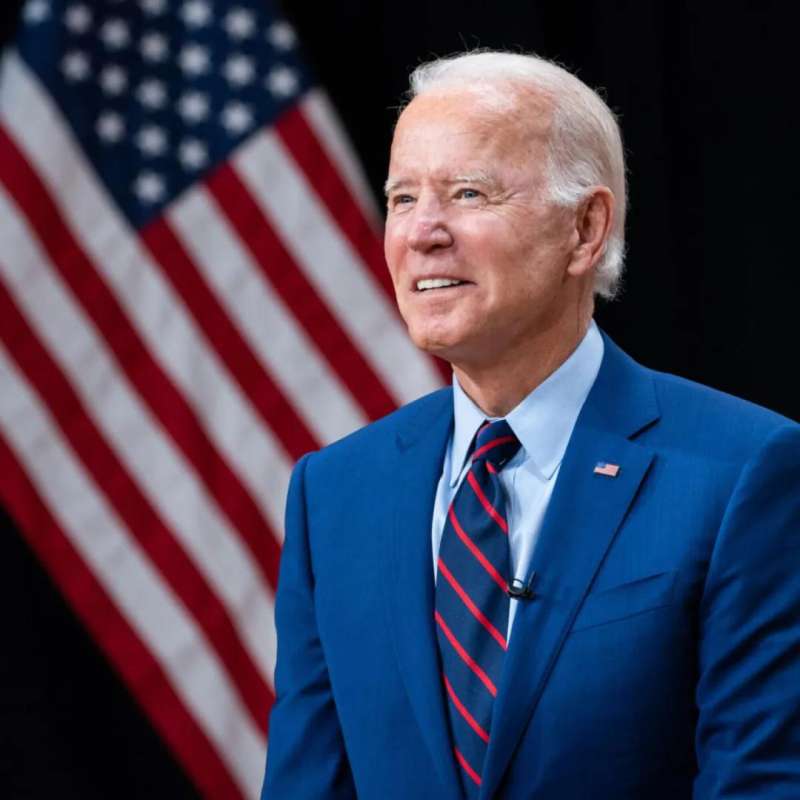
▲ Image source: White House official website, USA
The reason why foreign brands so-called boycott Xinjiang cotton comes from a survey report of Swiss BCI organization (Good Cotton Development Association). The report says there is so-called "forced labor" in Xinjiang, China. Strangely, however, BCI’s report did not quote the investigation conclusion of its Shanghai representative office that "there was no forced labor", but used the smear content of Xinjiang in the official US report and BBC report.
In fact, it is not the first day that the United States has made a fuss about cotton in Xinjiang.
At the last moment before Trump stepped down as president in early January, the United States brazenly announced a ban on the export of cotton and tomatoes from Xinjiang to the United States. As early as last September, Trump also threatened to sanction Xinjiang cotton for re-election. At that time, BCI stood up and "followed suit" and suspended the issuance of cotton licenses in Xinjiang.
Combining Biden’s latest speech, using the so-called labor standards to attack China’s industrial chain is becoming a new means for Biden’s government.
Using labor standards to block China industrial chain
On March 16th, the media reported that Richard Trumka, head of AFL-CIO, the largest trade union in the United States, sent a letter to US Secretary of State Blinken and national security adviser Sullivan on March 12th, demanding that Biden’s government and Congress ban the import of photovoltaic products from Xinjiang. One of the reasons is that there is systematic forced labor in solar energy production in Xinjiang.
It can be seen that the use of labor standards to block the industrial chain in China is not limited to cotton in Xinjiang.
As early as the establishment of the WTO, developed countries took advantage of the concealment, complexity and arbitrariness of international labor standards, turned labor standards into a new hidden non-tariff barrier, and attacked the comparative advantages of developing countries in terms of labor force, so as to achieve the purpose of restraining the economic development of developing countries.
It is true that the Declaration of Principles of Basic Labor Rights adopted by the International Labor Conference in 1988 clearly defined labor standards as four "core" rights: freedom of association and effective recognition of collective bargaining rights; Eliminate all forms of forced labor; Effectively abolish child labor; Eliminate employment discrimination.
However, the level of international labor standards is closely related to the national economic development. What’s more, the so-called "forced labor" in western countries does not exist in Xinjiang.
In fact, whether international labor standards can be linked with international trade has always been one of the focuses of debate between developing countries and developed countries.
At present, the international community has not incorporated labor standards into the multilateral rules of WTO, and developed countries usually take unilateral actions by this.
The report from BCI’s Swiss headquarters quoted a report from the CENTER FOR GLOBAL POLICY in Washington, USA. AdrianZenz, the author of the report, was once called "the backbone of anti-China research institutions set up by American intelligence agencies" by a spokesman for China’s Foreign Ministry.
It is reported that this report questioned the poverty alleviation work in Xinjiang, China. However, the report is vague on the key factor to distinguish whether it is "forced labor"-salary evidence.
This is the reason why international labor standards are easy to become an important tool for developed countries to wield the "human rights stick". This is also an important way for the so-called western values to influence the industrial chain.
The problem of self-control of industrial chain supply chain is becoming increasingly prominent.
Behind the stick is economic interests. In 2020, China’s textile exports totaled 320 billion US dollars, which is the main source of China’s foreign exchange income. With the rapid development in recent years, China has become the textile center of the world. The cotton output produced in Xinjiang in 2020 is about 5.2 million tons, accounting for 87.3% of the total national production.
According to the data of relevant institutions, in 2020, the global annual output of polysilicon is 530,000-550,000 tons, of which the output of polysilicon in China is 403,000-436,000 tons, and Xinjiang is an important source.
Some media mentioned an important background when they reported that the American trade union organization sued the photovoltaic industry in Xinjiang: the polysilicon produced in Xinjiang accounts for more than half of the world supply. Polycrystalline silicon is a key component of photovoltaic cells that convert sunlight into electric energy.
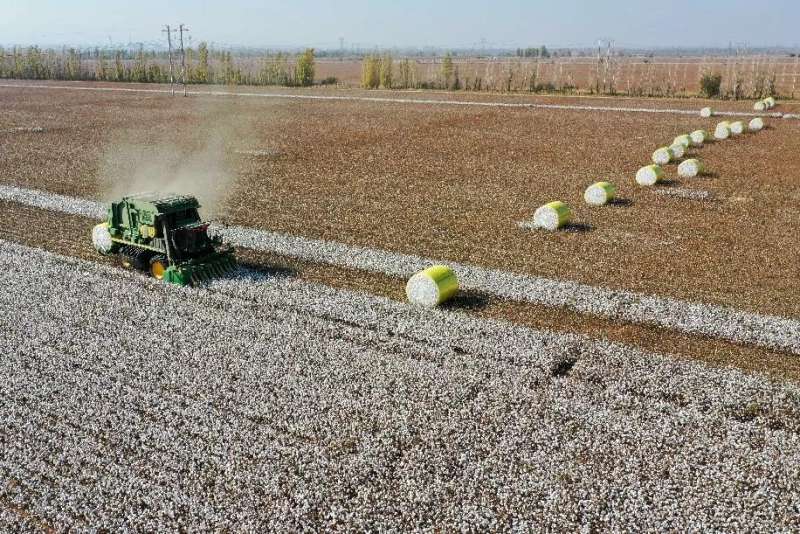
▲ Image source: Xinhua News Agency
From chips to Xinjiang cotton, and then to photovoltaic industry, the problem of independent controllability of industrial chain and supply chain has become increasingly prominent. Although China has the largest production capacity and the most complete industrial category system in the world at this stage, there are still many weak links that need to be broken through in order to build the relevant standard industrial chain and supply chain.
Among them, at the two ends of the global value chain, China should vigorously cultivate "chain owners" with market or technology control ability, and break through the dilemma of lacking the right to speak in the governance structure. However, an international industry organization like BCI in Switzerland, which has a strong voice, controls the standard-setting power in the upstream and downstream of the industrial chain to some extent.
"Sustainable cotton production standard" is an important access standard in the field of international textile circulation trade. At present, there are many international standards. Australia, Brazil, India and other major cotton producing countries have formulated their own standards, but China is still blank. BCI not only has a systematic sustainable cotton evaluation standard, but also has a huge cotton production. Today, BCI has thousands of members all over the world, covering the upstream and downstream cotton textile industry chain.
This cotton incident in Xinjiang is a concrete manifestation of the influence of value chain on industrial chain.
Constructing value chain governance structure with the cultivation of "chain owners" as the core
The textile and garment industry related to cotton production belongs to the market-oriented value chain. Multinational companies with brand advantages and sales channels organize transnational circulation networks through global procurement and contracting, and their core competencies are mainly reflected in design and marketing. Xinjiang cotton is in the downstream of the industrial chain and has almost no right to speak.
Compared with the market-oriented value chain, the producer-oriented value chain is mainly capital-intensive industries such as biomedicine and aircraft manufacturing. Its core competence is embodied in mastering key technologies and R&D capabilities, formulating and supervising the implementation of rules and standards, and finally gaining most of the value in the industrial chain.
In this regard, Liu Zhibiao, president of the Changjiang Industrial Economic Research Institute of Nanjing University, put forward the idea of cultivating "chain owners". He believes that building a value chain governance structure with the cultivation of "chain owners" as the core is the basic guarantee for newly emerging countries to have the right to speak in the world economic structure, and it is also an important content to enhance the independent controllability of the industrial chain supply chain.
Recently, after the Biden administration came to power, the "new means" of US trade with China have emerged. In this regard, we should not only maintain a high degree of vigilance, but also maintain our determination, do our own thing well, and accelerate the construction of a new development pattern of "double cycle" with the domestic big cycle as the main body.
Editor: Ke Rui Intern: Dan Yu Proofreading: Sissi
Contribute, cooperate and contact us: futurecity@xjbsmartcity.com.