one
Ten million years ago, apes were forced to move from forest to grassland, facing a more dangerous living environment. To this end, they responded by expanding the group size. grooming, which was originally used to maintain this sense of group connection, became inefficient. As a result, ape-man evolved a bigger brain, which made human babies "natural premature babies". 70,000 years ago, our ancestor Homo sapiens learned to speak. Because of the great responsibility of caring for babies, women have to rely on men. Women in subordinate positions have evolved more empathy when socializing, so that they can form a better social network. As the purpose of language evolution, gossip was formally born in this period.
Compared with the grooming behavior among primates, human gossip has obvious efficiency advantages: it contains more information and can realize a one-to-many model. For example, when one person is talking, three or more people can listen at the same time and join in the communication. At the same time, using language to gossip, participants also get the effect similar to grooming, that is, gain each other’s friendship, trust and loyalty. Therefore, gossip can be regarded as a cheap alternative mode of grooming, and it has been successfully upgraded to version 2.0. More significantly, gossip has greatly promoted the evolution of language. According to yuval harari’s opinion in A Brief History of Mankind, this well explains why Neanderthals, whose physique and intelligence were much higher than Homo sapiens, were finally eliminated by history, because of their low language level. They will only say, "There are lions by the river". The language of Homo sapiens is: "There is an adult lion by the river who has just finished drinking water and is hunting antelope."
Thus, language has become a tool of gossip. In other words, language evolved to better gossip. The gossip desire brought by rich language makes Homo sapiens know who has strong ability, who is hostile to himself and who has more resources in communication. This kind of gossip is enough to maintain a large-scale team, and on this basis, we can keep ourselves from falling into a state of being at a loss in tribal conflicts. It can be said that it is the power of gossip that makes Homo sapiens stand out, and has written a colorful stroke in the history of human civilization. In this way, as primates, early humans first combed each other’s hair, then chatted and gossiped, and finally all became a group of people who ate melons. This human characteristic ensures that the fire of gossip will not burn out in the long evolutionary history of later generations, and even flourish, thus laying the foundation for a beautiful new world of gossip for everyone.
two
Gossip is the need of small-scale human cooperation. Before the official news communication channel is established, human beings need to exchange information, evaluate others, restrain behavior, form values and reach a consensus through some channels, so as to complete group cooperation, defeat other species and seek favorable conditions for survival. In other words, before fictional stories and formal channels for news release, all human communication activities could only be conducted through "gossip". Furthermore, in early human life, "gossip" is news, and news is "gossip". There is no difference between them.
With the evolution of history, the need for large-scale human cooperation has emerged. At this time, a fictional story based on gossip was born. These fictional stories, except for some officially published works, mainly contain a large number of literary works from the folk and alluding to reality-especially poems and novels. Yes, it was gossip that contributed to the birth of the first batch of realistic literary masterpieces. As the first collection of China’s poems, The Book of Songs, which was written from 11th century BC to 6th century BC, contains a lot of gossip news. For example, there is an article "The wall has its own rules", which reads: "The wall has its own rules and cannot be swept. The conversations in your palace can hardly be said to be exported. What can be said is also ugly. " Directly gossip about the scandal of Xuan Jiang, the wife of Wei Xuangong, having an affair with an illegitimate child. The history of later generations will prove time and again that the secret inside the walls of the deep palace will always be the gossip focus of the people who eat melons.
Fiction is inseparable from gossip, and it can even be said that fiction is gossip. Ban Gu, a historian in the Eastern Han Dynasty, defined the novel as follows: "Novelists flow because of officials; The street talks about the gossip, and the hearsay is also made. " That is to say, what novelists do is mainly to record the gossip in folk streets and report it to the chief. Novelists are independent, but because the recorded events are from hearsay, just like today’s gossip bloggers, they are still regarded as worthless (which explains why novels have been seriously underestimated for a long time in the history of China). The materials of novels usually come from fables, historical biographies (especially unofficial history), literati’s notes and folk entertainment. Except for fables with strong imagination and symbolic meaning, the latter three have a strong realistic foundation and are variations of gossip in various forms.
It is precisely because of its strong reality that gossip can actively reflect social life and regulate behavior norms, and even influence politics, so all the rulers in China have attached great importance to it, for example, sending officials to collect poems and setting up Yuefu to collect folk songs, with the aim of examining people’s feelings for reference in politics. "History of Han Art and Literature" says: "In ancient times, there were officials who collected poems, so kings looked at customs, knew gains and losses, and taught themselves to be correct." At the end of the Eastern Han Dynasty, the Yellow Scarf Army Uprising opened the prelude to the Three Kingdoms in the singing of "Heaven is dead, Yellow Heaven is standing, and the world is prosperous at the age of 60".
three
If you want to select the most famous and interesting collection of gossip stories, Shi Shuo Xin Yu must be on the list. This note novel written in the Southern Dynasties records the anecdotes of many celebrities, handsome guys, beautiful women and dignitaries in the Wei, Jin, Southern and Northern Dynasties. In the golden age of thought and art, which is rare in China’s history, a dazzling group of "online celebrity" was born, including Shi Chong and Wang Kai, Wei Jie, a handsome man, Pan An, and Ji Kang and Ruan Ji … Among them, the most popular group belongs to "Seven Sages of Bamboo Forest", and they swept most of the headlines. In fact, these people drank, pick up hot chicks and took drugs (eating "Five Stones". In the troubled times of Wei and Jin dynasties, seven young people with lofty ideals made their debut in groups. Because they don’t want to get involved in the power struggle, they usually don’t do practical things, so they set the league rules of "Mo Yan’s state affairs", which is simply a clean stream in the troubled times.

Notes on Shi Shuo Xin Yu
With its handsome appearance and exquisite talent, the first men’s team in China history, composed of seven handsome guys, has numerous fans, from princes and nobles to ordinary people, all of whom are fascinated by it. Ji Kang, the representative of the Seven Sages in the Bamboo Forest, is not only first-class in piano skills, but also superb in aura. A song "Guangling Qu" has brought down countless fans, and even Wang Rong and Shan Tao in the team are his diehard fans. Look at the wonderful description in Shi Shuo Xin Yu Rong Zhi: "Ji Kang is seven feet eight inches long and has a unique charm. When he sees it, he sighs,’ Xiao Xiao Su Su, bright and clear.’ Or the cloud says,’ Su Su is like a loose wind, high and gentle.’ Shan Gong (Shan Tao) said:’ Uncle Ji Ye (Ji Kang Zi) is also a man, and Yan Yan is lonely and independent; He is drunk, and if Russia (towering) is about to collapse. " "Later generations used" Yushan "to describe the drunken appearance of handsome men.
Of course, the gossip in Shi Shuo Xin Yu is not only idolatry, but also the exposure and satire of social reality. For example, there is a record in the article "Waste": "The Emperor Wudi tasted Wang Wuzi’s home, and Wu Zi offered it for food, and used glazed utensils. There are more than 100 male servants, all of whom are graceful and graceful, holding food and drink with their hands. It is not beautiful, but different from the usual taste. The emperor asked him, and replied,’ Drink wine with human milk’. The emperor was very upset, so he went before he finished eating. " A few years ago, the topic of "keeping healthy with human milk" of the rich people caused a lot of criticism on the Internet, but it was a drop in the bucket compared with Wang Ji’s "keeping pigs with human milk". Legend has it that Nero, the ancient Roman emperor, was extravagant and burned Rome for the expansion of his palace, and the extravagant wind among the Wei and Jin dynasties did not fall behind. The article "Waste" is a comment on Wang Ji, Shi Chong and others’ arrogance and extravagance. They beheaded their handmaids as wine drinkers and made up money to decorate the fence, which was enough to destroy all people’s illusions about modesty and elegance.
four
Of course, note novels can’t meet the urgent needs of the people who eat melons for real-time gossip. At the beginning of the 11th century, people wanted to know which geisha Liu Yong, the top singer at that time, was in love with, rather than looking through gossip anecdotes compiled hundreds of years ago. Therefore, the all-encompassing and all-encompassing folk tabloids, as well as various entertainment and leisure places such as brothels, washes, chess houses, theaters, gambling houses, hunting grounds and teahouses, have become important sources for people to know first-hand gossip news. Negative news about the court, society and individuals, such as which official was summoned privately by the emperor, where floods broke out and flooded many houses, how many people died from the plague, and what negative events happened to which official, are unlikely to appear in the official Dibao. However, these gossip information also involves all aspects of interests, so people in the upper class need an alternative kind of "Dibao", that is, the tabloid that goes up to the court and down to the life of officials.
In the late Northern Song Dynasty, this kind of privately printed tabloid appeared (this is an epoch-making event in the history of China’s press and publication), and its editors and publishers were mainly editors of Dibao, but the sources of news were not limited to censors and other officials, and there were also special news inspectors. In the Southern Song Dynasty, Zhao Sheng recorded in The Ruling and Opposition Category that there were so-called internal spies, provincial spies and official spies, all of which were private tabloids, and the rate was forbidden to leak, so they were called "news" by stealth. Besides, ladies-in-waiting, handmaids, pages and so on are all reliable people who can provide inside information. The appearance of the tabloid enabled the dignitaries in the upper class not only to know the negative news of the society in time, but also to grasp the private lives of their political opponents. Of course, the content in the tabloid, like today’s gossip, has both true and fabricated rumors. There are countless officials who are influenced by the gossip information in the tabloid, among which Zhu Xi, a great scholar in the Southern Song Dynasty, suffered greatly. When Zhu Xi was "popular", an incredible gossip came out in the tabloid: Zhu Xi was cheating with his daughter-in-law. This made Zhu Xi angry and embarrassed, and there was no other way but for the dumb to eat Rhizoma Coptidis.
If the tabloid is more corresponding to the upper class, then the entertainment places are caught in the net, including high-class dignitaries, middle-class literati and ordinary ordinary people, so the news here almost covers the gossip of the whole society from top to bottom. As a result, we can see that there is such a bridge in many costume dramas: people from all walks of life gain other people’s privacy through these men and women who hang out in entertainment places, precisely because many people from all walks of life like to go to brothels, listen to ditties and mix gambling houses. In that era when there were no social media, variety shows and film and television broadcasts, most of the lyrics of Liu Yong, a gold medalist in the Northern Song Dynasty, came from romantic places, which spread widely and had a deep influence, from the ear of the emperor (a crane to the sky angered Song Renzong) to the people of Li, as the saying goes, "Where there is a well, all the lyrics are sung." A song "Rain Bells" (chilling and sorrowful) hides the explosive gossip news that makes the people who eat melons bloody, and we can appreciate the terrorist influence of spreading gossip in entertainment places.
five
In the 18th century, industrial revolution in europe was surging, which gave birth to gossip news in the modern sense. On the one hand, with the development of the industrial revolution, the autonomy of the countryside has been broken, which has become a part of the whole industrial world, and then various information needs for distant social conditions, raw materials, transportation and people have been born. At the same time, villagers left the countryside and entered the city to become industrial workers. The city is so huge that gossip information is beyond the reach of mouth and ears. People can’t know what happened on the other side of new york, London or Paris, so those interpersonal gossips that were originally "heard at the end of the village" need special middlemen to transit, and commercialized gossip was born.
Since the 1930s, the popular newspaper industry, represented by The New York Sun and The New York Herald, began to sell ordinary people’s gossip, including murder, violence, pornography, and so on. In form, it experienced three stages of development: yellow news, sensational reporting and tabloidization. Different from celebrity gossip, the selling point of ordinary gossip is things rather than people. Although the protagonists of gossip are often changed, their themes and even plots are very similar. They are always about accidents, ecstasy, great happiness, impermanence of life and death, good and evil results, ups and downs of life experience … the ancient motif that human destiny revolves around. People’s attention to the gossip of ordinary people is not due to the abnormality of the protagonist, but precisely to the normality of the protagonist. They stare at the unusual stories of these ordinary people; And once chosen by fate, they will repeat similar stories. In this sense, "all the shocking headlines in the newspaper are actually common things in the world."
Looking through the gossip news and old news, we can find a permanent theme: the constant conflict between isolated individuals and social regulations. It occasionally involves the upper class, but it is always full of the impermanence of the fate of the lower class. Ordinary people gossip is always about the unusual things of fate-occasionally good, mostly bad, such as violent death, suicide, separation of flesh and blood, wind and dust, overnight wealth, semi-empty … These daily updated stories are "not about traditional moral codes, but a living morality, an individual judgment that newspaper readers need to make every day". A secret fact is that these horror stories in the gossip of ordinary people may fall on your head one day. It is by watching the stories of ordinary people that the people who eat melons learn and cope with the choices and uncertainties in life. Yes, eating melons is a complex behavior of thinking about life and fate with a trembling pleasure.
six
Undoubtedly, compared with ordinary people’s gossip, people who eat melons are more interested in celebrity gossip. Celebrity gossip has a long history. Celebrities in ancient Rome were monarchs or warriors, celebrities in Wei, Jin, Southern and Northern Dynasties were elegant celebrities, celebrities in the early 19th century were politicians, saints and social activists, and celebrities in the late 19th century were successful people such as political stars and business tycoons. By the 1920s, the main composition of celebrities had shifted from productism (business and scientific elites) to the representative of consumerism (entertainment and sports stars), and this huge wave of consumerism has been affecting today. Despite many controversies, celebrity journalism became a formal news category at the beginning of the 20th century. It not only has a special media organization, distribution platform and market segments, but even firmly occupies the special pages of serious newspapers.
In the loose and atomized mass society, celebrity gossip is one of the few events that can unite the eyes of all walks of life. People’s attention to celebrity gossip can easily be extended to pan-social issues and moral issues. For example, the concern about the marriage problems of Wang Baoqiang, Jerry and other stars actually discusses the legal and moral contract in modern marriage; The debate on the family education mode of celebrities reflects the diversity and conflict of modern parenting ideas; The criticism of Zheng Shuang’s surrogacy abandonment incident makes people reflect on the legal and ethical issues behind it; The discussion on Wu Hechen, a disciple of Deyun Society, raising money through water droplets is related to the allocation criteria of social resources. The exposure of celebrity sexual harassment and even the Metoo movement sweeping the world point to the social reality of gender oppression and gender discrimination. The discussion on this kind of celebrity gossip has gone beyond the category of private affairs and become a public affair that unites group identification. By sharing and commenting on these celebrity gossip, girlfriends build a stronger sense of connection with each other.
Of course, the entertainment attribute of celebrity gossip is the eternal love of the masses who eat melons. Celebrities are either handsome in appearance or gifted, or successful in life. People are always used to projecting themselves on celebrities. The superior social status of celebrities often means oppressive plunder of resources. Therefore, people who eat melons are especially happy to see the negative news of high-ranking people, such as the disaster of Qi people caused by Tmall President Jiang Fan, the wives and concubines of Macau gamblers, the love and hate of Samsung family, the parting of Lao Yan, the founder of Amazon, and so on, as well as various movie and television stars, talent show stars, reality show stars and top-notch online celebrity gossip. Through functional magnetic resonance imaging (FMRI) research, it is found that the negative gossip of celebrities can significantly activate the reward center of the brain. Adam Perkins, a neurobiologist, commented that we are essentially running around in the modern world with the brains of cavemen. When a celebrity walks off the altar, the reward center of our brain is activated, as if witnessing the failure of a more successful competitor in our tribe.
seven
Today, with the rise and strength of online social media such as hot search rankings, the gossip of people who eat melons is simply dizzying, and sometimes several heavy melons appear one after another in one day, which makes senior gossip people a little indigestion (because there are one after another after the opening of the year in 2021, some netizens even ridicule that 2021 is the year of melons). Due to the unprecedented development of gossip information and the deep anxiety that pervades the whole society, the 21st century has become a veritable era of everyone gossiping. As the adhesive of social relations, gossip continues to explode with amazing energy in this era. If a person can collect many unknown secrets and know many people at the same time, gossip will have an influence. So someone added the third quotient: gossip quotient after IQ and EQ.
No matter how keen you are on gossip, almost everyone knows the simple truth that whenever we talk about others, we are talking about ourselves to some extent. When we know that a seemingly happy marriage is on the rocks, that a respectable big man has abused his family, or that a well-behaved celebrity has an unspeakable quirk, we will be relieved: they have the same troubles as me, and they are as ordinary as me. This explains why people who eat melons are often keen to watch, share and comment on the negative news of celebrities. Although there is an old saying that "sit still and think about yourself, and gossip is not about people’s mistakes", people who eat melons have long forgotten the ecstasy of sharing big melons, enjoying the wonderful feeling of β -endorphin secreted by their brains when gossiping. As the saying goes, "gossip is cool for a while, and gossip has always been cool."

Virtue of bad habits
Of course, although gossip is loved by everyone, talking about other people’s negative news is more or less morally flawed. Therefore, gossip is sometimes more like an adventure. When people are gossiping, they are worried that walls have ears, while enjoying the thrill of challenging the rules. In this regard, the American philosopher Emrys Westacott righted the gossip in the book The Virtue of Bad Habits: "Moral purity is the characteristic of a saint, but this sage-like life needs to be achieved at the risk of reducing wealth, passion and challenge, which is inhuman." At the same time, he gave many benefits of gossip with profound insight into human nature, including "gloating (others’ misfortunes will make us feel a kind of vicious happiness), gloating (discussing others’ failures or misfortunes can cause us to feel complacent about our own virtues, abilities or wisdom), feeling of power (information superiority generated by the subject being discussed or the audience who are not yet aware) and itching pleasure (spying on others).
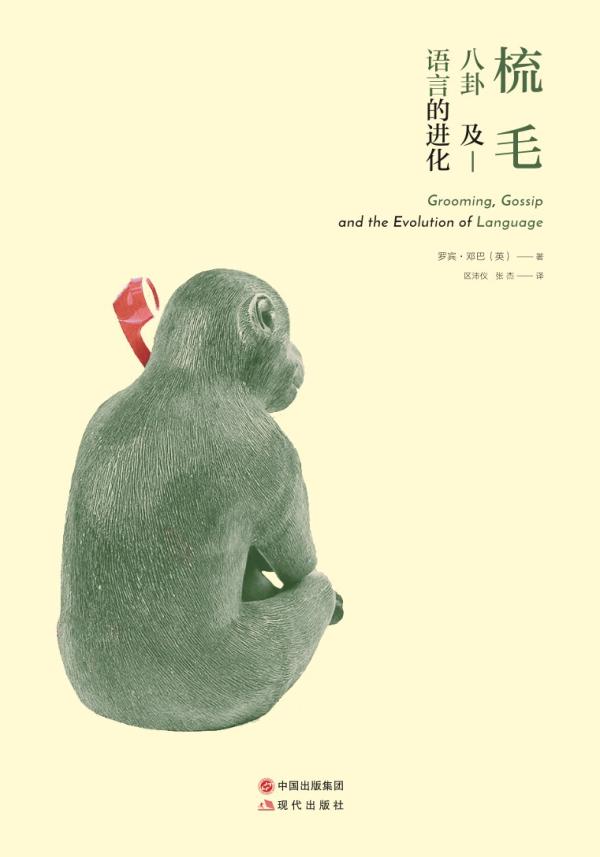
Grooming, Gossip and the Evolution of Language
It can be seen that gossip is just like human nature, neither a devil nor an angel, but a person is just a person. Gossip is neither synonymous with gossip and vulgarity as people generally think, nor a perfect thing without moral flaws. But on the whole, people generally underestimate the power of gossip. It was not until the second half of the 20th century, especially when Robin Dunbar, a famous British anthropologist, wrote the masterpiece of popular science, Grooming, Gossip and the Evolution of Language, that people began to realize the great value of gossip. Gossip, with the image of a titan-like ancient hero, has entered the modern era with the dark atmosphere in the depths of history. In the rolling tide of secularization that has gradually stepped down from the altar, it tries to surpass the powerful "Schopenhauer Pendulum" with certain social attributes and entertainment spirit inherent to human beings-by talking about the other who is not present, so that human beings can temporarily get rid of the tragic situation of alternating rule of boredom and pain and get some symbolic psychological comfort.
Heidegger said: "Language is the home of existence." As an animal of language, gossip always makes human beings feel at home. Or further, gossip is the essence of human beings.